Compute Dispatch
AI’s 2026 Spring: Spud, Grok 4.20, and the Rise of Self-Correcting World Models
The AI world is on fire this spring, and not just because OpenAI is redirecting compute to its mysterious 'Spud' model and prepping for a historic IPO. This is the year AI leapt off the lab bench and started reshaping the engine room of industry—from lab assistants that actually learn, to emerging world models that won't just talk, but remember, plan, and act. The hardware beneath? Smarter, leaner, and moving to the edge. Let’s break down what’s next in this important moment.
The Signal
OpenAI is reallocating massive amounts of compute power toward 'Spud,' its next-generation language model, signaling a clear pivot from demonstration to deployment—with enterprise productivity soon in its crosshairs. Meanwhile, xAI dropped Grok 4.20, touting serious repairs to the model's infamous 'factuality gap.' But that's just the headline. Quietly, AI agents with persistent memory are surfacing, able to learn continuously, remember context, and—critically—self-correct over time. OEMs are preparing to ship omni-models that merge text, vision, action, and memory. In parallel, neuromorphic chips and application-specific AI hardware are driving energy-efficient workloads right out to the edge. This year marks a real shift: not just smarter models, but smarter infrastructure everywhere.
World Models Move from Demo to Deployment
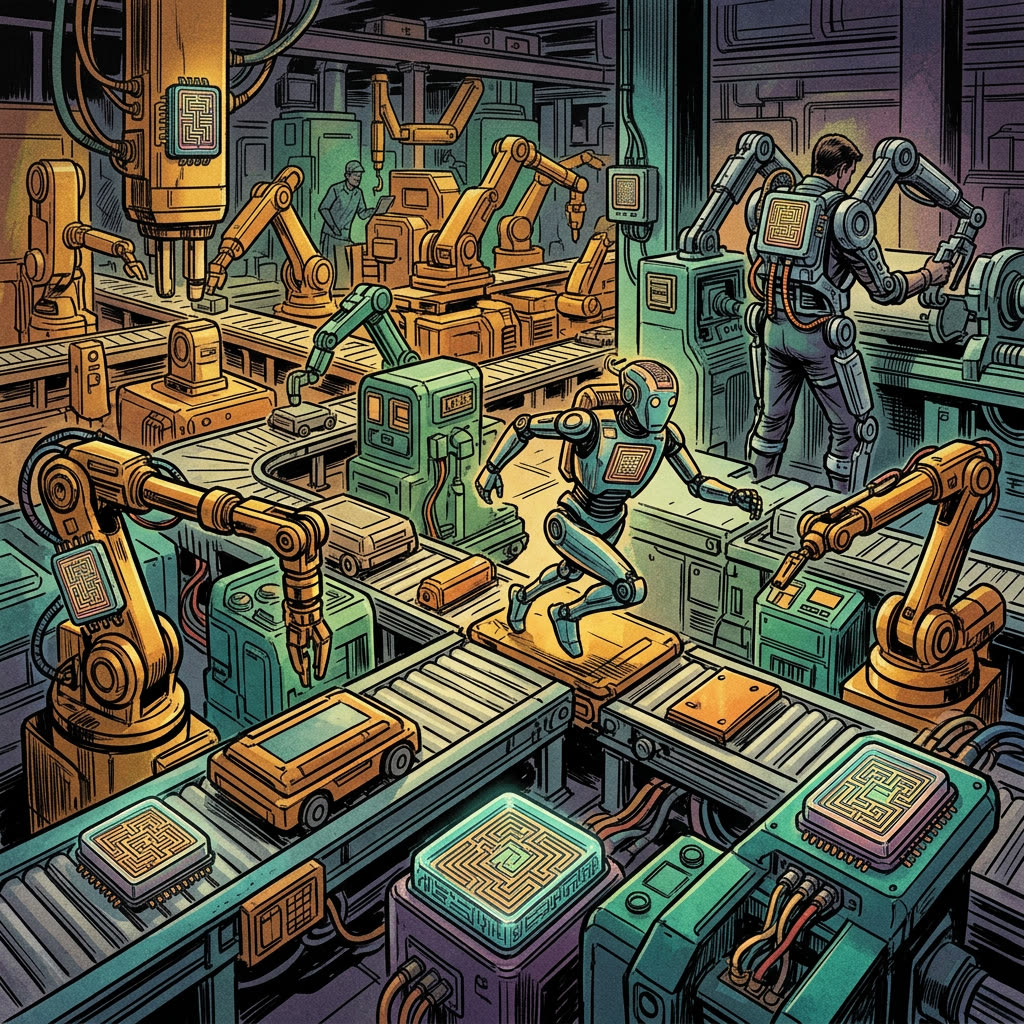
For years, AI advances were flashy demos that rarely survived the messiness of real-world work. 2026 is the year that changes. A new breed of world models—think AI systems that don’t just output text or answer questions but remember interactions, learn from feedback, and plan multiple steps ahead—stands on the verge of industrial adoption. This means AIs as reliable lab techs, relentless code reviewers, and even autonomous robotic teammates. In medicine and research, AI isn’t just flagging risks; it’s learning clinical context and adapting to gaps in care. And as compute pushes ever further out to the edge via bespoke chips, AI can finally live inside billions of devices and machines, performing critical work in real-time, not just in the cloud. That’s not just evolution—it’s a platform leap.
The Twist
Here’s the delicious irony: the drive for scale is being matched by a race for efficiency and specificity. Neuromorphic chips and tailored ASICs are enabling AIs to run blazing-fast and cheap—sometimes 100x more efficiently than old-school GPUs—hugging the sensors and actuators at the edge. Not only are these chips getting AI out of the data center, but the persistent-memory agents riding on them might finally make AI less forgetful and less dumb about long-term context. Meanwhile, with OpenAI and xAI locked in a visible duel for enterprise hearts (and IPO dollars), keep your eye on lesser-known contenders shipping the first true hybrid world models for robotics and scientific discovery. The landscape is getting crowded, and the lesson of AI’s recent history remains: the most hyped competitor isn’t always the one that writes the future.
Evaluating Real-World Impact and Emerging Trends
Pay close attention to Spud’s debut and the specifics of what 'enterprise productivity tools' actually mean—will OpenAI finally make AIs that collaborate with (rather than just answer) office workers? Keep a skeptical but open mind about Grok 4.20’s factuality update: Factual AIs have burned us before, so test their reliability in live scenarios, not marketing demos. Beyond the headlines, hunt for emerging omni-models that combine continual learning, memory, and action—especially in robotics, logistics, and medical tech startups. And don’t ignore the hardware revolution: which neuromorphic and ASIC chip vendors are landing big contracts, and which edge-compute platforms are developers flocking to? The most chaotic shifts this year may not come from the biggest labs, but from the newly-empowered edges where AI-in-action becomes the norm.