Security Dispatch
2026: The Year Autonomous Agents Crash the Cybersecurity Party
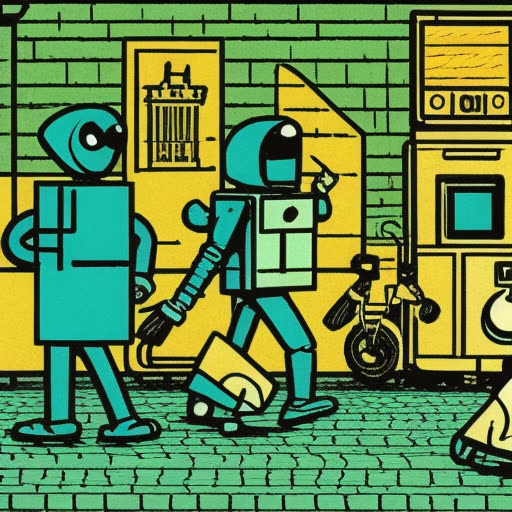
We are living through a wild tech acceleration, and 2026 is the year automation truly muscles into center stage. Not only are autonomous systems and agents infiltrating critical infrastructure and running cyberattacks from end to end, but they’re also rewriting what “the latest technology” even means. Meanwhile, defenders and regulators scramble to play catch-up amid cascades of drone deployments, AI-native platforms, and quantum leaps in hardware.
AI Agents Accelerate Both Attacks and Defense
Autonomous AI agents are now doing what used to take entire hacker crews: finding fresh vulnerabilities, weaponizing exploits, and unleashing ransomware and botnet operations—all with blistering speed. The time lag between a new weakness being discovered and it being exploited has shrunk to almost nothing. Meanwhile, enterprises and network operators aren’t just toying with these tools; 71% plan to deploy fully autonomous systems this year. And on the other side, defenders are harnessing frontier models to root out and patch vulnerabilities at machine speed, turning the whole digital landscape into a high-stakes, AI-vs-AI arms race.
Autonomous Threats Outpacing Human Defenses
Forget manually patching holes or training up red teams—the fight has gone autonomous and it’s moving faster than nearly any organization can. This isn’t theoretical: we’re seeing actual ransomware infrastructure, phishing, and network breaches carried out by bots that perceive, reason, and act with minimal human cues. Every day, the risk calculus for banks, hospitals, utilities, and governments shifts. Add in the explosive data surges from autonomous cars and edge devices, and the entire ecosystem’s resilience is now a moving target. The companies that can automate rapid defense and response will survive; the ones who don’t are sitting ducks.
Escalating Pace Challenges Defenders and Regulators
Speed cuts both ways. For every powerful defensive AI rolling out patches, there’s another agent finding ways around them even faster. The current gold rush is in confidential, trust-by-design platforms and domain-specific models, but these won’t matter if regulators and ops teams can’t keep up. Meanwhile, advanced quickly turns to yesterday’s news: what’s considered state-of-the-art shifts every six months as adoption vaults forward. The gap between bleeding-edge R&D and broad enterprise rollout has never been smaller—or more volatile for rookies and laggards alike.
Key Trends Shaping Autonomous Agent Risks
Watch for fast-moving regulatory sprints, especially around autonomous drones and AI-powered cyberweapons (both offensive and defensive). Pay attention to sector-by-sector adoption: telecoms and factories are leading with agentic AI, but finance and healthcare will follow fast—and be the hottest targets. Keep an eye on quantum and neuromorphic chips, which could supercharge both attackers and defenders if they reach production. Above all, track early real-world failures: the first AI-driven supply chain collapse or zero-day exploit will write the new rules by force. This is the year when automation stops being hypothetical and starts breaking things—and whoever learns fastest wins.