Biotech Dispatch
When DNA Robots and Agentic AI Collide: The Next Tech Shockwave
Ready or not, we’re barreling toward an era where digital brains actually get things done in the physical world. We’re talking DNA robots cruising through your bloodstream, autonomous AI systems taking over high-stakes decisions, and machines smart enough to resuscitate extinct species. This isn’t sci-fi hype — it’s the collision of biotech and agentic AI, and the pace of innovation in 2026 is turning heads in every industry.
AI and DNA Robots Enter Real-World Use
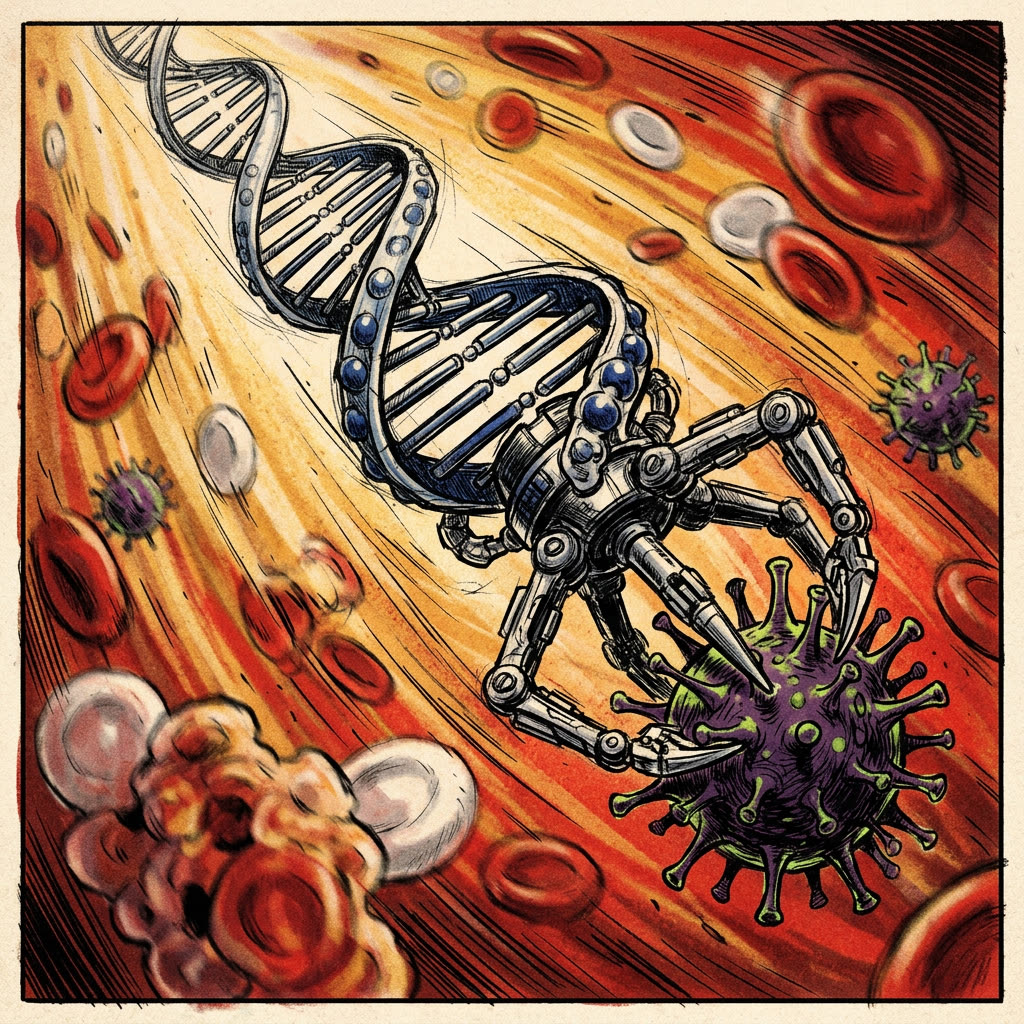
The real-world applications of AI have exploded in scope. DNA-based nanorobots are moving from exotic proof-of-concept to plausible near-term medical tools, capable of tracking down specific viruses or delivering drugs at the molecular scale. Meanwhile, TechCrunch Disrupt’s ‘Real World AI’ stage is jamming with demos of agentic AI taking over: think autonomous drones on battlefields, factory floors running on pure AI intuition, and (get this) biotech companies using automation to try and revive extinct animals. MIT Tech Review confirms: companies are frantically shedding their creaky legacy systems and plugging in data pipelines to feed trusted, autonomous AI agents.
The stats back it up. According to StartUs Insights, agentic AI is set to make 15% of all enterprise decisions by 2028, slashing manual work by up to 60% for early adopters. DSLMs and AI-native platforms aren’t just buzzwords — they’re slashing costs, juicing ROI, and scaling toward a $94B market by 2030. Autonomous systems aren’t limited to chatbots any more; these things can perceive, reason, plan, and act with remarkable independence.
Programmable Biology and Autonomous Enterprises
This fusion between digital brainpower and physical reach is the real inflection point for technology in 2026. DNA robots turning the human body into a programmable frontier offers possibilities we dreamed about a decade ago — personalized cancer hunters, virus assassins, molecular repair kits. On the macro scale, agentic AI systems are freeing enterprises from the chains of legacy data, meaning their AI can actually act on the world, rather than just analyze spreadsheets in the background.
It’s more than just labor-saving: this level of automation and intelligence will reshape entire sectors, from deadly effective logistics engines to truly adaptive defense systems. And, if biotech and AI keep entwining, we may see nature itself become programmable, raising the wild prospect of controlling diseases, restoring extinct species, and reengineering ecosystems. The shift isn’t just about better margins; it’s a fundamental change in what humanity can tinker with, and who gets to steer the ship.
Risks of Unchecked AI and Biotech Integration
With great programmability comes spectacular complexity — and risk. DNA robots in the bloodstream could dramatically alter medical treatments, but what happens if they glitch, mutate, or get hacked? Agentic AI making big decisions without human oversight makes for efficient operations — until an algorithm decides the wrong person is an intruder, or a business process spins out of control because the data input was garbage.
The race to shed ‘legacy creep’ can leave companies dangerously exposed, as trust in data, security, and intent becomes paramount. And when we start talking about using AI and biotech to reintroduce species or intervene in ecosystems, the ethical and practical risks surge off the charts. Bottom line: the technology is ahead of the old playbooks, and a lot of organizations are jumping in before the guardrails are built.
Key Signals to Watch in DNA Robotics and Agentic AI
Keep your eye on how quick biotech companies move DNA robots from petri dishes to clinical trials — regulatory approvals and early clinical successes will signal an inflection point. In the enterprise space, the winners will be those who manage to blend freedom from legacy systems with robust AI guardrails; watch for headline-grabbing failures as well as massive performance leaps.
Don’t tune out the public sector, either: how governments regulate agentic AI, especially in military and environmental spheres, will set the tone for what’s allowed (and possible). And if anyone pulls off a Lazarus moment — reviving an extinct animal or engineering a reliable, in-body DNA robot — it will be more than a tech news flash. It’ll be a clear sign that the future is arriving way ahead of schedule.