Quantum Dispatch
Edge Intelligence Goes Mainstream: The Tech Power Play of 2026
2026 is shaping up to be the year when ‘cutting edge’ becomes everyday reality, and the biggest surprises aren’t even hiding. Autonomous AI agents, quantum-powered everything, and industrial resilience hacks are rewriting the global tech order — with high-stakes drama already playing out, both in boardrooms and on the battlefield.
Converging Technologies Reshape Critical Infrastructure
The U.S. is moving from tech pilot fish to apex predator, fusing edge intelligence, quantum sensing, and next-gen biotech directly into critical infrastructure. We’re not talking cute factory robots anymore — agentic AI is quietly handling decisions once made by whole teams, shrinking manual workload by up to 60% for early adopters. Meanwhile, quantum computers and sensors are leaping out of the research cage, promising advances in resilience and detection, from industrial sabotage to global supply chain hiccups.
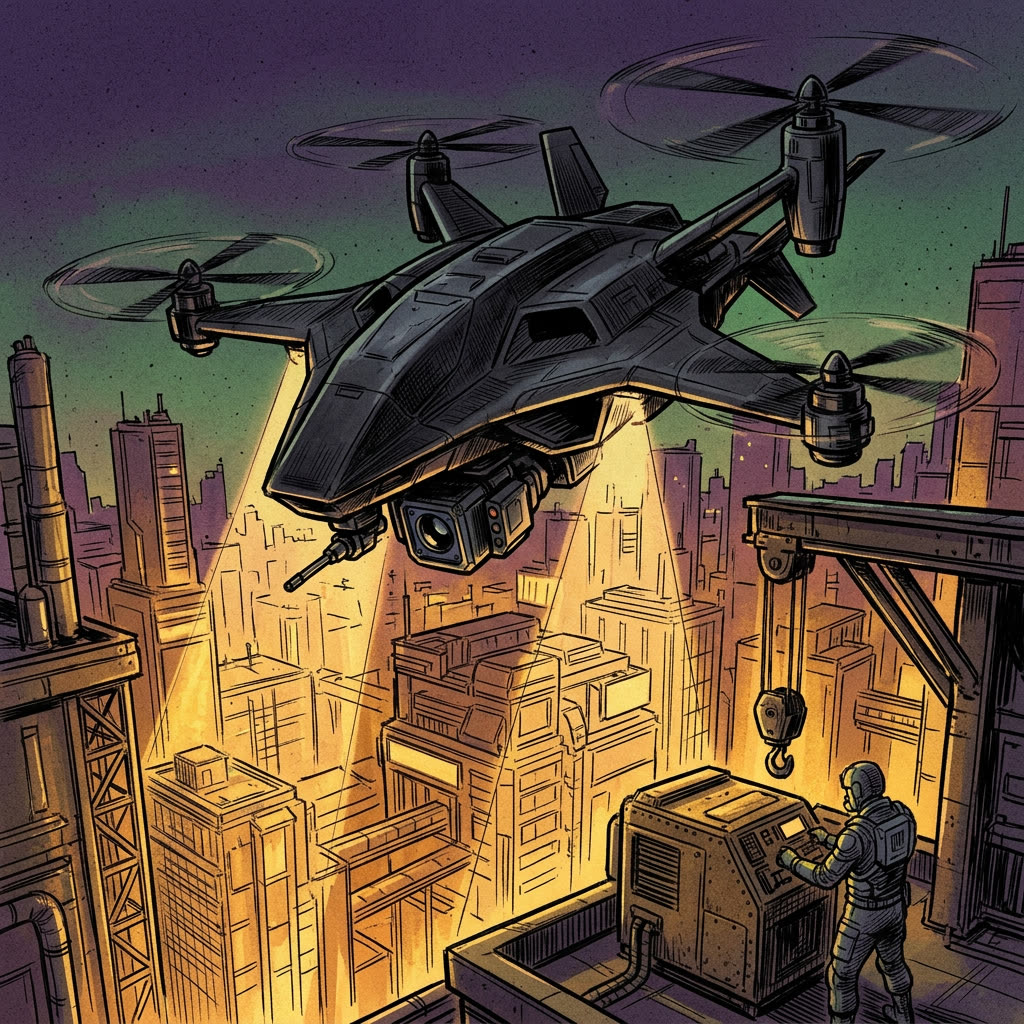
All the hype around autonomous systems? It’s splashing into the real world, fast. Autonomous drones aren’t just for Amazon deliveries; a Russian strike drone reportedly killed three Ukrainian troops last week—no human in the loop. As these technologies converge, expect capabilities once locked in secret labs to disrupt everything from energy grids to biotech manufacturing.
Autonomous Systems Redefine Competitive Advantage
These aren’t nerdy upgrades — they’re the new basis of power. Agentic AI and quantum advancements are letting organizations leapfrog rivals, not just optimize them. By late 2028, autonomous systems are projected to handle 15% of enterprise decisions, driving not just efficiency but massive cost savings, improved resilience, and ROI jumps north of 40%. Tech that was ‘bleeding-edge’ two years ago is now battle-tested and widely deployed — shifting what’s possible in every sector from telecom to pharma.
This arms race isn’t confined to benign settings. The battlefield, both military and economic, is being redrawn around whoever wields these systems fastest. The chilling example out of Ukraine is just a glimpse: as autonomous weapons grow deadlier and corporate titans deploy AI-natives at scale, both the risks and rewards multiply. For nations and companies craving an edge, 2026 is go time.
Autonomy Risks and Trust Challenges
If you’re not already knee-deep in these rollouts, you’re playing catch-up. Adoption is accelerating: 71% of network operators plan to deploy advanced autonomous systems this year. But there’s peril where there’s promise. Full autonomy means less human oversight, so the risk of catastrophic system errors—or even unintentional escalations—is real and rising. Are organizations genuinely ready for AI agents that don’t just answer questions but reason, plan, and execute without oversight?
Then there’s the wildcard of ‘trust-by-design.’ Quantum security is still new, and the more organizations optimize for autonomy, the bigger the viability gap grows for those still stuck in yesterday’s manual workflows. Integration woes, compliance headaches, and public backlash to automated decision-making have torpedoed more than one bold deployment.
Defense and Industry Drive Edge AI Arms Race
Follow the money, but also follow the weapons. Look for U.S. DoD and industrial heavyweights to accelerate integration of edge AI, quantum, and biotech — and also for every major power to invest in tech countermeasures and digital sabotage. Every headline about a newly released LLM, neuromorphic chip, or killer drone marks a major new front in the tech struggle.
For futureproofers, the big signals: tracking the rise of domain-specific AI models — where the real competitive cleaving begins — and the adoption curve of 6G networks to support all this autonomy. If you’re evaluating vendors, beware of those peddling yesterday’s solutions as tomorrow’s magic. In 2026, the only thing outdated faster than your smartphone is your edge intelligence stack.