Biotech Dispatch
Tiny DNA Bots, Biological Datacenters, and the Coming Tech Supercycle
It’s not just faster networks and smarter AI: 2026 is shaping up to be a year of major change across biotech, computation, and automation. Imagine DNA robots patrolling your bloodstream, animal-free drug testing done by wardrobe-sized 'biological datacenters,' and the rapid mainstreaming of 6G and quantum. If you’re not tracking these advances, you are missing the major changes under your feet.
DNA Robots and Biological Datacenters Transform Medicine
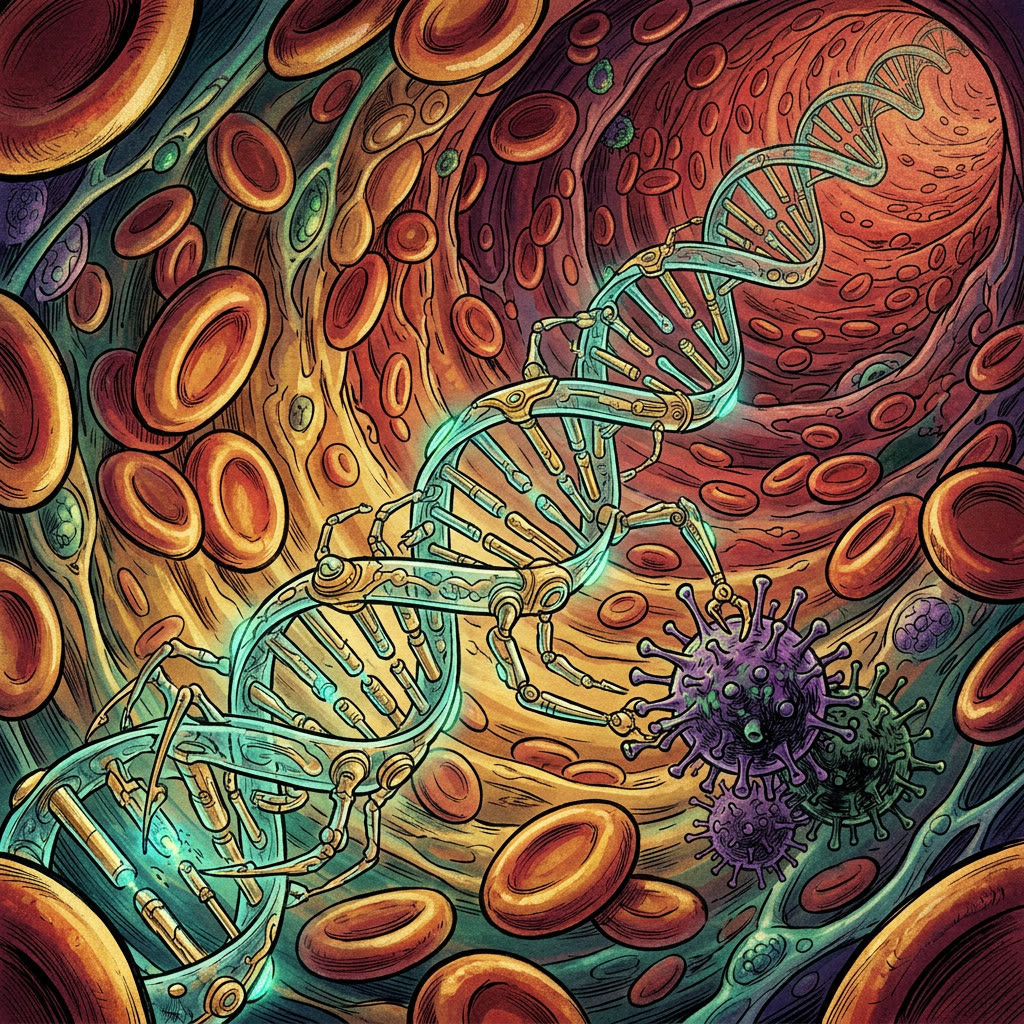
First up: the DNA robots. These miniscule programmable machines aren’t sci-fi—they’re in labs now, hunting viruses, targeting tumors, and building devices at a molecular scale. The ability to send custom bots through your veins means the long-promised age of precision medicine is about to jump from theory to treatment rooms. And then there’s Vivodyne’s 'biological datacenter'—think racks of mini-labs run by robots, growing real human tissues for testing drugs, no animals required. That’s more than cute innovation; it’s a foundational shakeup for the entire pharmaceutical R&D pipeline.
Pile on 6G, quantum computing, neuromorphic chips, and new autonomous AI agents that are far more than chatbots—they plan, reason, and act (sometimes without humans in the loop). Every industry’s value chain is up for grabs as these technologies break out of the lab and become tools for strategists, engineers, and investors. The sense of acceleration is electric, and it’s only compounded by how fast new technology becomes mainstream these days.
Redefining Industry Norms and Ethics
Forget incremental improvements—these aren’t just better versions of last year’s tech. DNA robots and biological datacenters aren’t about optimizing life sciences, they’re rewriting its rulebook: faster drug pipelines, new therapies for untreatable conditions, ethical R&D, and a hard turn away from animal testing. That changes the economics (cheaper, faster, better) and the moral argument in one stroke.
Meanwhile, when AI stops responding and starts reasoning—when quantum computers solve problems that would take classical computers centuries—the old competitive advantages collapse. Business models built on access, unique data, or proprietary testing get bulldozed. This is why the smartest leaders aren’t just adopting new tools, they’re actively dismantling and rebuilding their own workflows before their competitors (or regulators) force the change.
Barriers to Adoption and Backlash Risks
We’re in the hype cycle’s danger zone: the tech is dazzling, but deployment lags, and most organizations aren’t remotely ready. Trust in autonomous agents? Spotty. Regulatory hurdles for DNA bots and tissue-grown testing? Massive. There’s a risk of backlash if these technologies race ahead of social consensus or if ‘miracle’ systems fail in the wild.
On the business side, companies who chase buzzwords without a serious upgrade to their infrastructure, data policies, or risk management will get flattened. Quantum won’t just disrupt your encryption, it may disrupt your entire competitive position. And just because you *can* put a DNA robot in someone’s bloodstream doesn’t mean the FDA (or the public) will smile and wave it through.
Key Signals for Tech Supercycle Leadership
Track Vivodyne and competitors in the biological datacenter space; their partnerships with big pharma and regulators will set the pace. Watch the first-in-human trials of DNA robots—if these succeed (or fail), expect an instant reprice of biopharma stocks. Keep your eye on 6G standards, because whoever controls the protocol wins the data, and the war for network supremacy will reshape tech and telecoms globally.
And most importantly: follow the path from autonomous AI prototypes to real-world, revenue-generating deployments, not just toys and demos. The critical inflection isn’t invention—it’s adoption, scaling, and who gets left behind when the new world is the only world anyone wants to live (or compete) in.