Quantum Dispatch
Quantum Leaps & Light Speed: The AI and Tech Revolution Rocketing Into 2027
The past few months have seen a flurry of advances that jolt the very definition of state-of-the-art: physics-defying AI hardware, quantum experiments echoing the birth of the cosmos, and world leaders openly musing about biotech-driven immortality. If you thought 2026 was the year of consolidation for artificial intelligence and its sidekicks, what’s coming next will make this year look quaint.
Quantum Computing and AI Speed Milestones
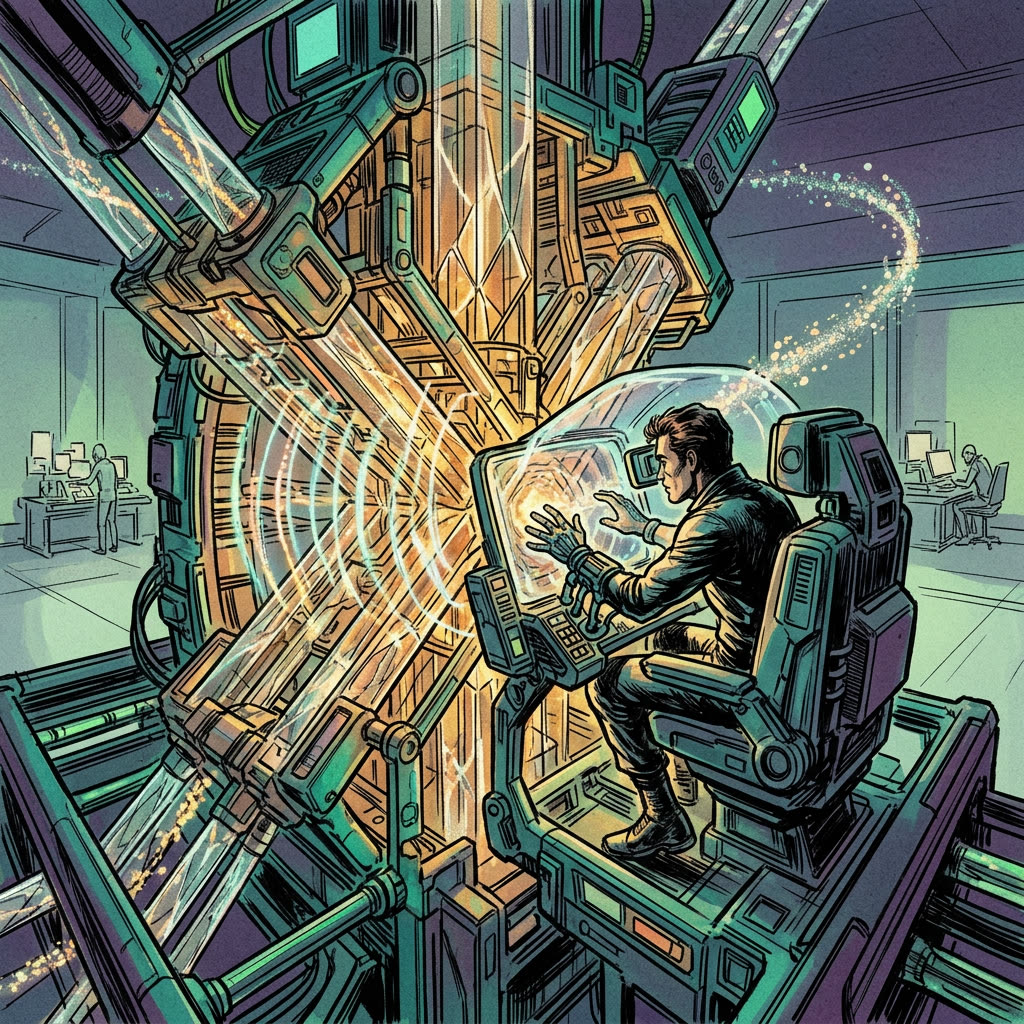
First, let’s talk pure speed: University of Pennsylvania researchers just unveiled a hybrid light-matter particle that could turbocharge AI computing, slashing energy use while potentially blowing past silicon’s speed limits. Physicists, meanwhile, have harnessed quantum simulators to recreate the chaos of the early universe itself, inching humanity closer to an era where quantum computers don’t just solve problems—they rewrite the definition of what ‘problem’ even means. Meanwhile, AI is not only mastering code at record pace, it’s powering a new wave of autonomous robots, and agentic AI systems are already eating into manual work across industries—from logistics to legal.
Amid all this, Vladimir Putin opined to Xi Jinping that the biotech-fueled future might not just be longer, but radically younger—a world of perpetual medical renewal and, yes, whispers of longevity bordering on immortality. Put simply, 2026’s headlines give only the barest hint of what technology is hurtling toward: machines that learn, bodies that last, and computers that bend physics to their will.
Quantum-AI Synergy Reshaping Industry Economics
This isn’t hype: the fusion of recent advances in quantum technology and next-gen AI chips promises to torpedo both the obstacles and the costs that hamper today’s AI. Faster, leaner AI hardware will exponentially speed up model training and inference, unlocking new classes of products that today seem like science fiction—think personalized digital concierges, next-gen prosthetics that anticipate needs, or realtime thought-to-text interfaces for people with neurological conditions.
The economics here are staggering. Autonomous agentic systems—AI with goals and decision-making baked in—are projected to handle up to 15% of enterprise choices by 2028, wiping out swathes of manual grunt work. Meanwhile, AI-native platforms and domain-specific large models are slashing error rates and ramping up ROI at double-digit rates. For the first time, we’re not just iterating faster—we’re genuinely rewriting the rulebook for entire industries, with all the creative and chaotic consequences that implies.
Barriers to Real-World Adoption and Equity
Bleeding-edge tech means bleeding-edge problems. Just because a new technology works in a lab, don’t bet your business on seeing it in action before 2028—or even later. Hybrid light-matter computing, quantum simulations of early-universe physics—these are thrilling, but still moonshots in terms of widespread application. Capital is surging in, but so are hype cycles, vaporware, and the risk of epic busts. The timeline from impressive demo to reliable, scalable product remains a maze of regulatory, engineering, and trust challenges—especially in fields like biotech and autonomous decision-making.
And let’s not romanticize immortality talk: World leaders jawing about swapping out parts to live forever is as much political theater as scientific forecast. The ethical and societal hurdles—inequality, access, basic human meaning—loom larger than any technical challenge. The next few years will test whether these revolutions can move from the privileged few toward anything resembling democratization.
Key Battlegrounds: Scale, Regulation, and Societal Impact
Keep your eyes glued to the convergence plays: which AI and quantum hardware startups actually crack scale (and who they partner with, or get swallowed by)? Which agentic AI systems move from PowerPoint to piloting real-world processes, and how are regulators responding? The trajectory of investment—doubling in hot sectors from software to robotics year-on-year—means the biggest winners and the hardest faceplants will happen in plain sight.
Finally, monitor the societal flashpoints. AI-managed decisions will hit not just corporate workflows but civic life—expect the first legal and labor battles over ‘AI bosses’ within two years. And as biotech possibilities stir up age-old dreams (and nightmares) of living forever, the friction between scientific possibility and public appetite will only intensify. The only sure prediction? The news cycle will get weirder, wilder, and harder to keep up with—just the way we like it.