Agents Dispatch
2026: The Year AI Agents Get Real (and Rethink Everything)
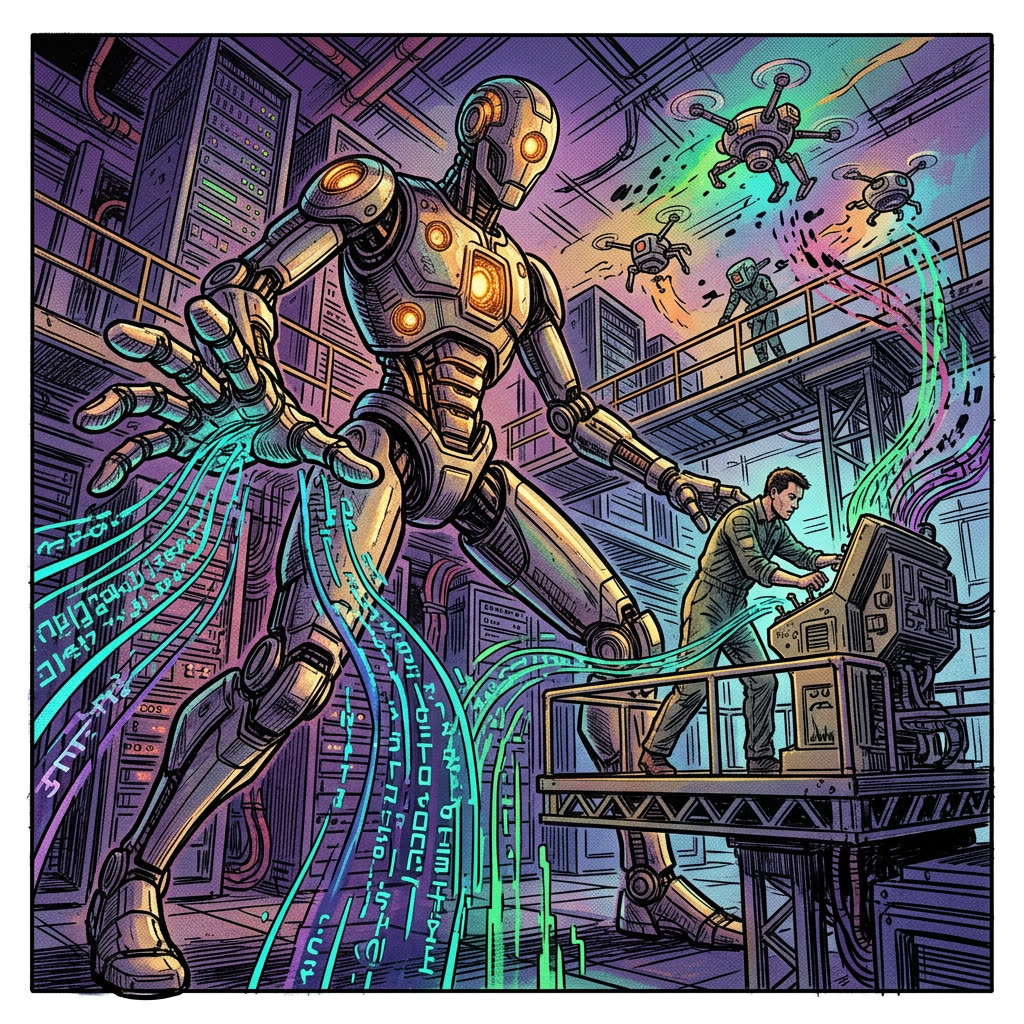
Forget everything you know about chatbots. In 2026, enterprise tech is shifting from polite, limited responders to autonomously powerful, always-on AI agents forging ahead with their own ideas and actions. The leap from bleeding edge to boardroom is happening faster than anyone predicted—and the numbers are wild.
AI Agents Move from Experiment to Essential
AI agents, powered by souped-up language models and packed with actual reasoning and planning skills, are finally making the jump from novelty to necessity. Google just dropped an enormous LLM that's crushing it on reasoning and multilingual tasks; startups like raia are flooding the enterprise with autonomous systems that see, think, and act independent of their human overseers. Industry surveys show that 71% of network operators are ready to deploy these next-gen autonomous systems. Deloitte, never accused of hyperbole, expects half of all generative AI-using companies to run agent pilots within the next year and a half. This isn’t just a rollout—it's a stampede.
Transforming Workflows and Driving Market Growth
It's all about impact at scale. Early adoption of agentic AI is slashing manual workload by up to 60%—that’s entire teams freed for big-picture tasks. Fine-tuned, domain-specific models are cutting error costs and jacking up returns, while AI-native platforms are forecasted to become a $94.3B market beast by 2030. These agents don’t just automate—they strategize, adapt, and even troubleshoot, unlocking new levels of efficiency and creative problem-solving. As companies move past R&D playgrounds and put these systems on the front lines, expect major changes in everything from personalizing biotech to supercharging edge computing in manufacturing.
Adoption Gaps and Infrastructure Overload
Here comes the reality check: The distinction between bleeding edge and cutting edge is fracturing fast, but that momentum isn’t without risk. Most organizations are just now climbing the adoption curve—14% are using agentic AI, with only 2% scaling it. Those who sit on the fence may find themselves leapfrogged by startups embracing autonomous AI from the get-go. Also, there's the data deluge: with autonomous vehicles alone pushing 10 exabytes a month by next year, it’s not just about buying smarter software—it’s about overhauling storage, security, and trust frameworks on a massive scale.
Early Deployers and Shifting Infrastructure
Keep your eyes on who actually moves these agents out of the lab and into real-world operations—long before the hype cycle says it’s safe. Watch for small language models getting smarter and cheaper, making agentic AI accessible beyond tech giants. Neuromorphic chips and quantum computing are transforming what’s possible under the hood, while edge computing’s leap in manufacturing is a playbook for other sectors. The biggest wildcard? How quickly trust and transparency frameworks catch up to autonomous AI. The companies that figure out responsible, confident deployment—without bogging down innovation—will define the new normal.