Compute Dispatch
Edge Intelligence, Autonomous Agents, and the Quantum Surge: The New Tech Arms Race
The tectonic plates of technology are shifting fast under our feet. The United States just turbocharged its arsenal by mashing up edge intelligence, quantum sensing, and biotech—right as enterprise-ready autonomous systems are poised to swallow up repetitive, manual labor across industries. The race is on, and the dividing line between the most advanced and bleeding-edge is vanishing at record speed.
US Advances in Edge AI and Autonomous Agents
Here’s the power move: the U.S. is aggressively deploying edge AI, rapid quantum advancements, and biotech enhancements—all with an eye on making its industrial backbone faster and more immune to shocks. We're talking about AI not just ‘in the cloud’ but at the front lines, squeezing insights out of data the very instant it appears, from manufacturing floors to battlefield sensors. Quantum sensing and neuromorphic chips are pushing this even further, allowing machines to process and react with blistering speed, while biotech quietly expands what’s possible for everything from supply chain management to health diagnostics.
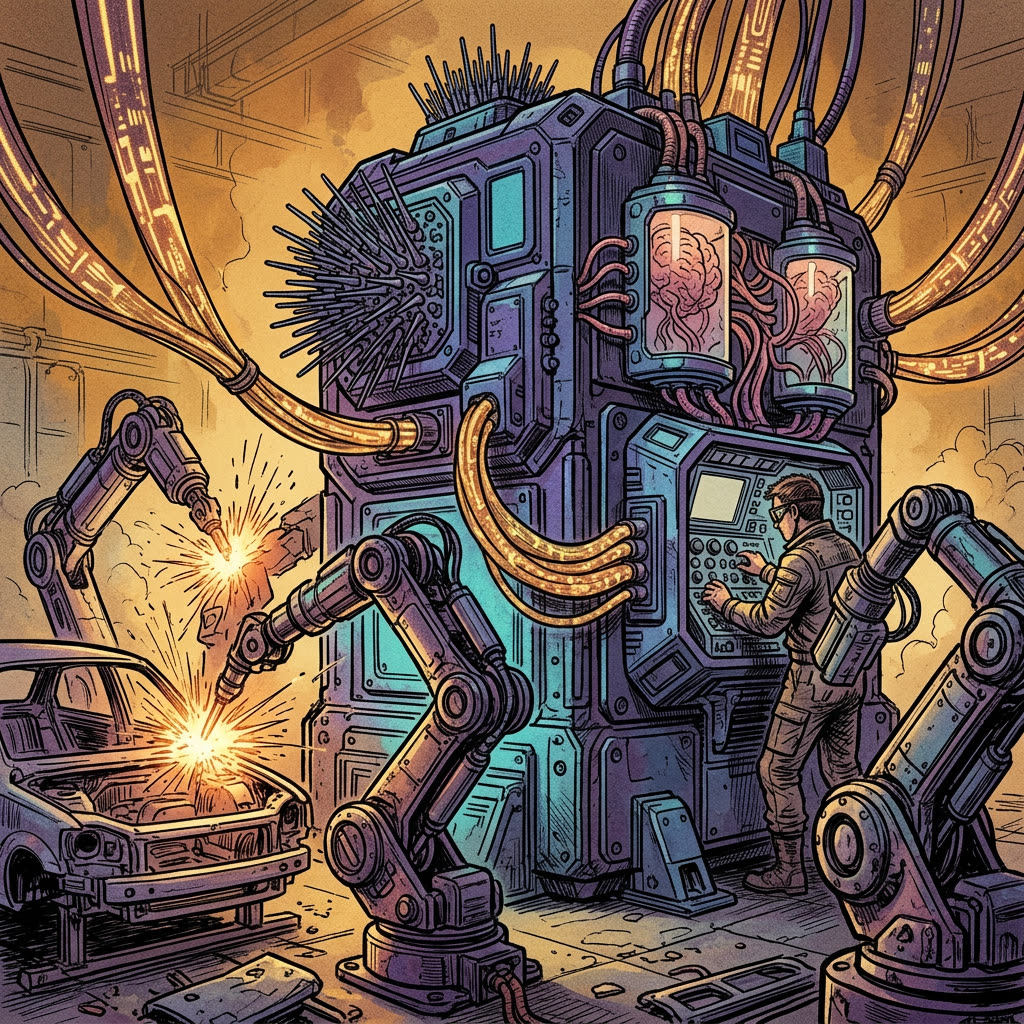
Meanwhile, autonomous agents, the once-hyped dream of truly independent AI, are becoming practical reality. Heavyweights like Anthropic are launching their own chip teams, giants like SpaceX and Samsung are pouring billions into infrastructure, and AI agents are about to get their own wallets, letting them act financially on your behalf. The stats are breathtaking—a robot market doubling in five years, AI-native platforms worth nearly $100B by 2030, and real-world results like automotive welding pass rates jumping to almost flawless levels thanks to real-time edge intelligence.
Global Stakes of the Edge Intelligence Race
This isn’t incremental change; it’s an arms race with real global implications. Whoever nails autonomous systems and edge intelligence at scale wins the productivity wars, period. Early enterprise adopters are slashing manual workload by up to 60%, and reducing costly errors with domain-smart models. In harsh industrial environments, edge AI is eliminating downtime and waste at rates we’ve never seen before, and that compounds fast in terms of money and competitive threat.
U.S. officials know what’s at stake—a technological edge for industry, military, and infrastructure, plus a chokehold on data security. The current scramble to keep Chinese datacenter hardware out of American AI supply chains is real: distinctions between commerce and national security technology have never been blurrier, or more contested. At the same time, mass deployment of quantum sensing and autonomous agents could upend everything from logistics to healthcare within just a few years.
Deployment Challenges and Regulatory Risks
But here’s the hair-raiser: the rush to deploy isn’t seamless. Building edge intelligence means huge new hardware rollouts, re-training the workforce, and battle-testing systems that cannot afford catastrophic failure—especially if we’re talking infrastructure, medicine, or real-time defense. Quantum sensing and neuromorphic hardware are still complicated and expensive, and hype outpaces results in some quarters. Adoption curves remain uneven—71% of network operators say they’ll deploy autonomous tech, but that means nearly a third are on the fence, and interoperability is a giant headache.
There’s also the regulatory dagger: as these systems get smarter and more agentic, issues of trust, accountability, and security grow in tandem. Giving AI agents wallets and autonomy—are we ready for that? Data privacy, rogue behavior, and cyber-resilience become both legal and existential questions. One system glitch, and the fallout could be historic.
Real-World Deployments and Emerging Risks
Track the tangible: Who’s actually rolling out enterprise-scale edge intelligence in high-stakes sectors? Which countries and companies are securing their hardware supply chains versus exposing themselves to foreign influence? Expect some unsung hero startups to win fat defense and industrial contracts as the big platform wars heat up.
Also, keep your eyes peeled for regulatory crackdowns or landmark accidents: the first time an autonomous agent makes or loses a fortune on its own will send shockwaves through the legal world. Watch for sudden jumps in productivity (or catastrophic outages) wherever AI-native platforms go live. This is the year where bleeding-edge becomes mainstream—possibly before anyone’s fully prepared.