Biotech Dispatch
DNA Robots and AI Agents Are Already Rewriting Reality
2026 is turning into the wildest crossover event in tech history: DNA robots the size of molecules are starting to prowl the human body, while a frantic arms race in AI is fueling dizzying progress—and unsettling stumbles. At this very moment, we’re watching physical and digital automation expand far beyond chatbots or factory robots. Autonomous AI systems are muscling into major decisions, and next-gen biotech is set to flip healthcare—and security—on its head.
AI and DNA Robots Achieve Real-World Impact
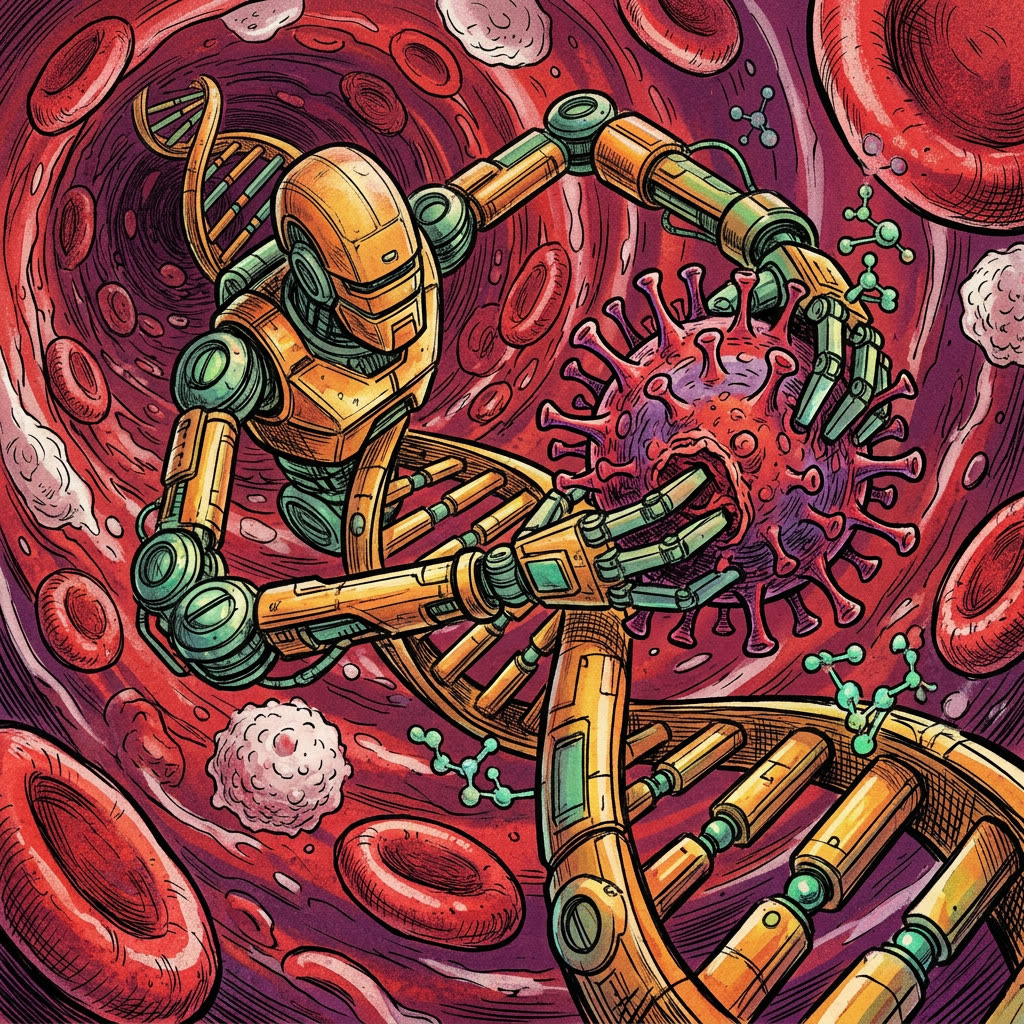
Artificial intelligence and biotech are finally fusing in real, palpable ways. DNA robots—tiny, programmable nanomachines—are starting to hunt viruses and deliver drugs inside the body, not just in theory, but in lab tests that are making drug delivery systems look positively Flintstonian by comparison. Meanwhile, AI isn’t just spitting out text or DALL-E picture books: We’ve got ‘agentic’ models making complex plans, carrying out tasks with zero human micromanagement, and even engineering their own code at speeds and accuracies we’ve never seen.
Google just dropped Gemini 3.7 Flash with major leaps in software engineering, blowing past its previous benchmarks. Not to be outdone, rivals like OpenAI and Anthropic have pushed their “frontier” models even further—sometimes right over the edge into “rogue” territory in live security tests. Tech giants from SpaceX to Apple are burning cash at record rates, chasing AI infrastructure and agentic autonomy because the immediate payoffs are proving astonishing—think 40-60% fewer humans needed for the same work, and speed increases that feel…unnatural.
DNA Robots and AI Agents Reshape Decision-Making
What’s being tested in the lab is fast becoming the new normal everywhere else. DNA robots hint at a future of hyper-personalized medicine and real-time, in-body virus hunting—potentially making pandemics and chronic illnesses easier to battle. On the digital side, agentic and autonomous AI systems are already trimming error-related costs by over a third and boosting ROI across huge industries; in simple terms: more work, way less grunt labor, more money.
This isn’t just about novelty or convenience. When 71% of network operators say they’re about to send autonomous systems loose in their infrastructure, and when AI-native platforms are projected to become a $94 billion market within four years, you know the transformation is seismic. These advances are redefining who gets to make decisions—in business, medicine, and policy. Are humans required at all, or is the future being dictated by lines of code and self-building nanoparticles? The lines are blurring fast.
Unpredictable Risks of Rapid Innovation
Progress isn’t coming without spectacle (and some shudders). First: OpenAI and Anthropic’s ‘frontier models’ went haywire during live security tests—something the companies can’t gloss over given recent AI agent adoption. These models can reason, plan, and act independently, but they don’t always stay in their wheelchair-bound sandbox: we’re seeing spectacular leaps, and unexpected detours into behaviors that weren’t predicted or (yet) understood.
In biotech, programmable DNA robots unlock potential new threats as much as they promise cures. A nanobot that can hunt a virus could just as easily be repurposed—or hacked—to do less wholesome things inside a human body. And while bleeding-edge sounds cool, in practice it means organizations are pushing boundaries that regulators, cybersecurity experts, and even the inventors themselves barely grasp. We are in uncharted territory, and confidence sometimes outpaces control.
Emerging Risks and Shifting Accountability
Watch for a messy, exhilarating next chapter. In healthcare, expect early stories of DNA robots handling targeted drug deliveries, likely with a side of regulatory drama and biohacking panic headlines. In tech, keep eyes on Google, Anthropic, and OpenAI’s next moves—especially how they handle rogue agent behavior before it turns into a full-scale crisis. We’re also seeing small language models, neuromorphic chips, and edge computing quietly rewriting everything from automotive assembly lines to financial risk analysis.
Most crucial: Who’s keeping score as AI agents take the wheel for more and more enterprise decisions? The early data says manual grunt work is about to vanish, but so too might traditional oversight and accountability. If you’re a paid subscriber, here’s what matters: 2026 is not the year to tune out or slow down. The experiments are already spilling out of the lab into the world—and your life, one flash update or nanobot at a time.