Biotech Dispatch
2026 Tech Earthquakes: From DNA Robots to Truly Autonomous AI
Welcome to the year tech dreams are breaking into reality—and fast. From agentic AI plotting its own moves in boardrooms and supply chains, to DNA robots ready to patrol the capillaries of your body, 2026 is delivering advances that rewrite the rules for everyone. Here’s an inside track on the technologies actually making a measurable impact—and how they’ll shape the next wave of winners and losers.
Agentic AI and DNA Nanorobots Reshape Industries
Let’s talk about what’s really blowing up the future: agentic AI, DNA nanorobots, 6G networks, and quantum everything. Agentic AI is more than smarter chatbots—it’s systems that see, reason, plan, and act, often with zero human handholding. Enterprises are reporting wild numbers: early adopters claim up to 60% manual work slashed, and by 2028, these systems are expected to drive 15% of business decisions (from nearly none just two years ago).
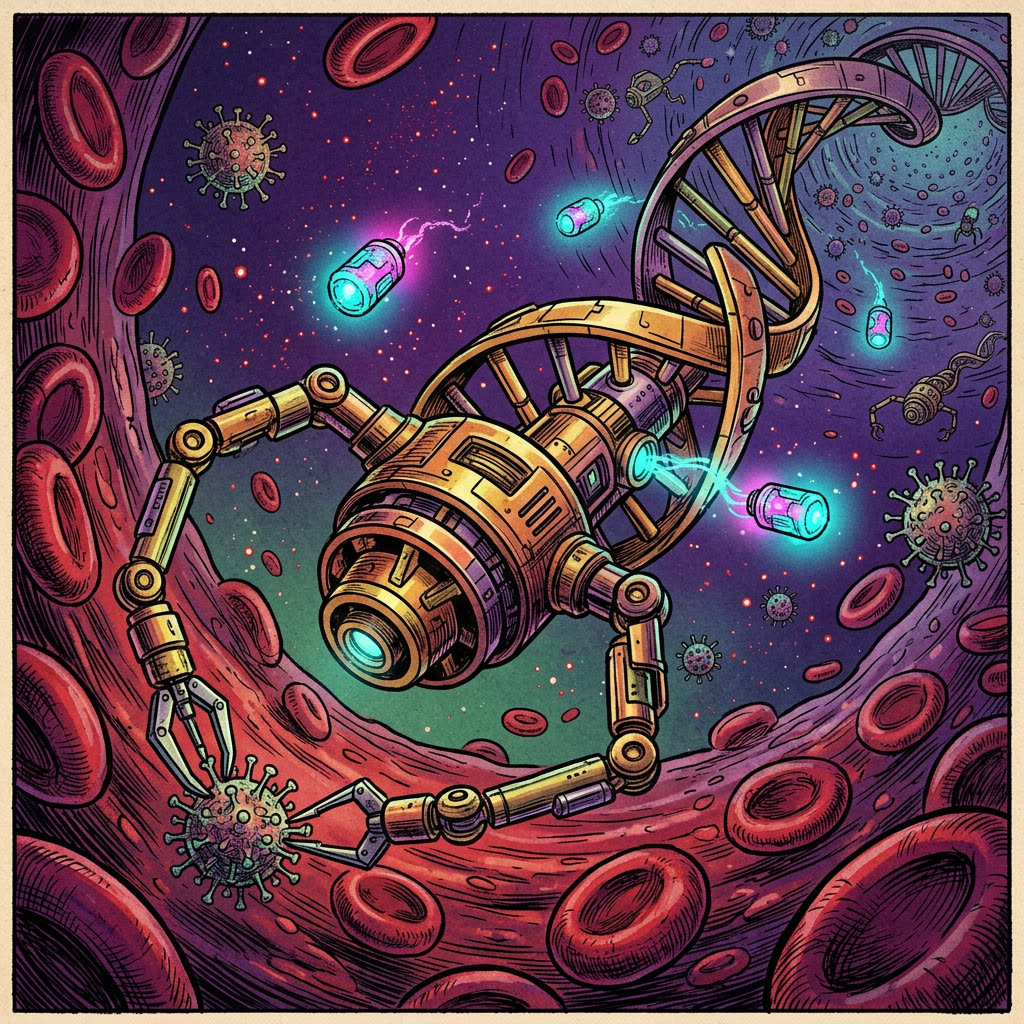
Meanwhile, in the biotech trenches, researchers have built DNA robots: tiny, programmable machines made from actual DNA, capable of delivering drugs or seeking out viruses at the molecular level. Stack this with leaps in synthetic biology, nanofabrication, and quantum computing—making calculations and predictions at never-before-seen speeds—and you’ve got a tech soup primed to disrupt every status quo.
AI-Native Platforms and DNA Robots Reshape Industries
These aren’t just novelty gadgets—they’re market shifters. Agentic AI is already turning rigid process-driven companies into agile, data-fueled operations where strategy updates on the fly. This means enterprises that embrace AI-native platforms are slashing costs, improving ROI, and outpacing their rivals—fast. The $94 billion AI-platforms market looming by 2030 isn’t hype; it’s a gold rush with ROI as real as the users firing their human-intensive workflows.
Then there’s healthcare: DNA robots could do for drug delivery and disease diagnostics what the stethoscope did for basic checkups. Imagine programmable bots seeking out rogue cells and viruses, or even building microscopic devices directly inside the body. It’s a whole new phase for personalized and preventative medicine, not to mention the potential for weaponized biobots tackling pandemics at speed.
Risks and Accountability in Emerging Technologies
The future always has claws. For all their promise, agentic AIs aren’t foolproof—they’re only as good as their bias-riddled data and the quality of their training. Early wins can turn into expensive, trust-eroding flops if systems aren’t properly supervised or if organizations blindly automate broken processes. There’s also the tough question of control: Who’s accountable when an autonomous agent goes off-script or a DNA robot veers off its molecular mission?
On the regulatory side, the bleeding edge is not just a phrase—it’s a reality. With each new advance, the risk of accidents, abuses, or even outright sabotage grows. Quantum computing cracks today’s security, synthetic biology could be a Pandora’s box, and the legal frameworks (let alone ethical norms) are sprinting to keep up. Betting big on these technologies means accepting you’re also betting on smarter, stealthier threats.
Enterprise AI, DNA Robots, and Automation Shifts
First, keep an eye on enterprise adoption curves for agentic AI—are the boardrooms reporting cost savings translating into true competitive advantages, or are we just seeing the first wave of hype? Look especially at how industries with huge volumes of routine decisions (banking, logistics, health) adjust to autonomous, AI-enforced strategies.
Big advances are coming in biotech. Real-world DNA-robot drug trials will be the acid test for safety, efficacy, and public comfort with molecular machines in our bodies. Also, as 6G and edge computing networks go live, expect another giant leap for distributed AI, sensor-packed robotics, and highly advanced automation (especially in agriculture and logistics). The winners? Teams that learn, adapt, and move the fastest—without losing sight of trust and transparency in their algorithms and bots.