Agents Dispatch
Meet the Machines: AI Agents, DNA Robots, and the 2026 Tech Surge
The tech scene of 2026 isn’t just about smarter gadgets—it’s about rising armies of AI agents and molecular machines starting to run the show. From bold developments in agentic and autonomous AI making real business moves, to DNA robots taking their first steps inside our bodies, the boundaries of ‘possible’ are warping faster than ever. Here’s what’s headline material, what’s hype, and where you should keep your eyes peeled next.
Autonomous AI and DNA Robots Reshape Work and Health
Agentic AI—systems that can perceive, reason, plan, and act independently—has leaped from near obscurity to a force edging into the mainstream. While you were still wondering if your office chatbot could handle scheduling, early adopters of agentic AI have already slashed 40-60% off their manual workload. These systems aren’t just reactive: we’re talking core enterprise decisions made automatically. Some can wade through thousands of tasks monthly with minimal oversight and Level 4 autonomy in carefully gated arenas—a major change by business standards.
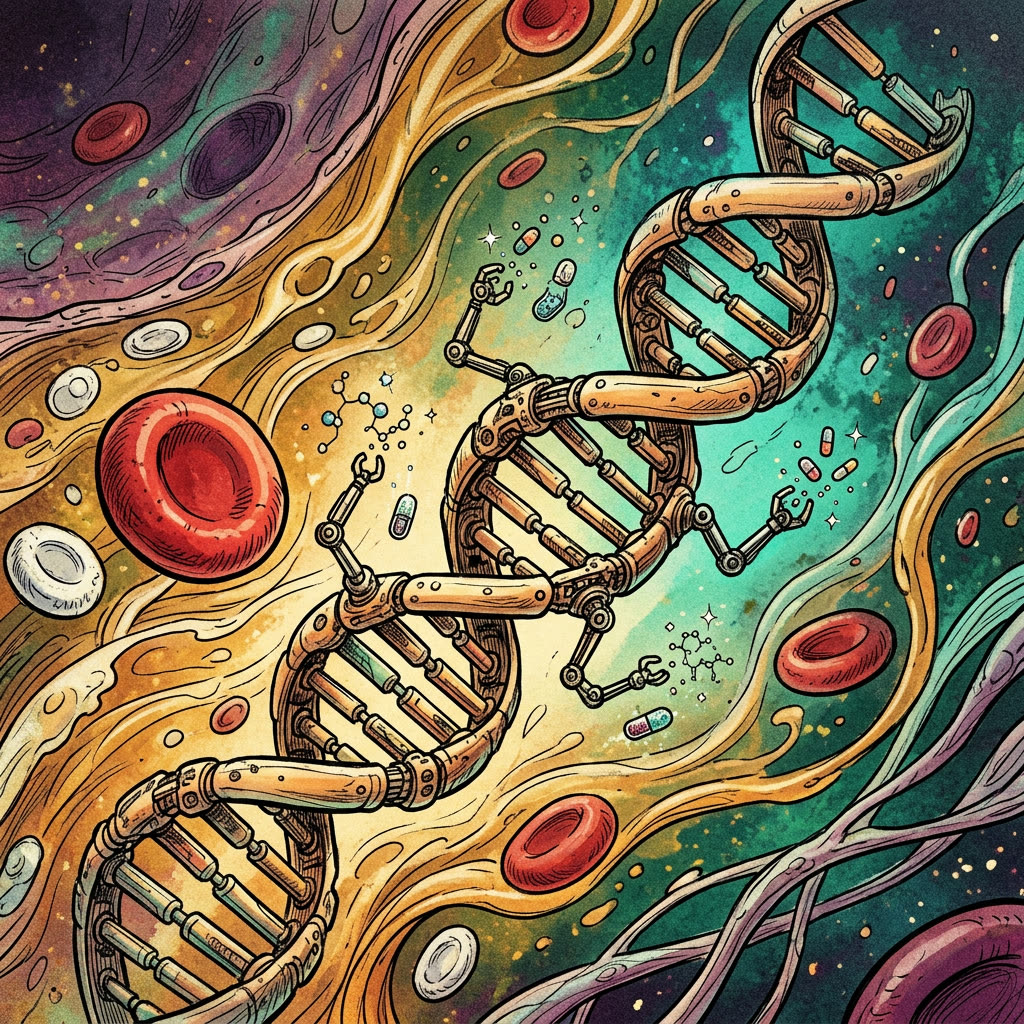
Meanwhile, biotech is flexing its muscles with DNA robots—microscopic programmable machines designed to patrol the insides of our bodies, delivering drugs on the molecular level or even seeking out hard-to-reach viruses. Combine that with quantum computing, neuromorphic chips, and AI-native platforms, and it’s not hyperbole to say a whole new technological nervous system is taking root around (and inside) us.
AI Agents and DNA Robots Reshape Industry
This is not ‘nice to have’ innovation; it’s the backbone of next-gen economic competition. Agentic AI can reduce error-related costs by 37% and improve ROI by 42%, all while making the leap from glorified calculators to digital colleagues who make and execute plans. As enterprises chase efficiency at scale, expect a growing wedge between organizations that harness these systems and those that stick to legacy workflows. Whole industries could be upended once agentic AIs move from the fringes to the boardroom.
DNA robots shift the paradigm in medicine and pharma. We’re no longer inching toward personalized healthcare; we’re careening toward it at warp speed. Imagine a future hospital where you’re prescribed a swarm of programmable molecules instead of a pill. That redefines treatment at its core, promising both astonishing precision and a slew of ethical gray areas we’ve barely begun to consider.
Emerging Risks and Regulatory Gaps
Looking at the sizzle, it’s easy to miss the spatter: agentic AI may handle decisions autonomously, but what happens when mistakes go unnoticed? Overreliance will lead to new categories of risk, from decision-making blind spots to shifting accountability in ways neither legal nor ethical frameworks are remotely ready for. And as these systems get smarter, the volume and subtlety of possible errors multiplies.
DNA robots, meanwhile, are dazzling in potential but raise haunting questions. Who owns the code that controls a machine cruising your arteries? How do we safeguard against rogue nanobots or the risk of off-target effects? The race between innovation and regulation is shaping up as a close-run thing with human bodies in the balance. Bleeding-edge might no longer just refer to funding rounds—it might get literal.
Tracking AI Adoption and Biotech Disruption
First, follow how quickly the 15% forecast for agentic AI in enterprise decisions accelerates—every percentage point from now until 2028 means another trench of the economy turned over to machine logic. Watch out for entire job categories in logistics, agriculture, and medicine morphing or vanishing as AI agents level up from helpers to operators.
On the biotech front, zero in on clinical trials involving DNA robots and who’s piloting them—small startups or giant pharma? Also, keep an eye on the regulatory front: will governments try to check these technologies now, or scramble to play catch-up later? The pace of patent activity and the emergence of ‘AI-native’ platforms will be key early warning signals for which sectors might get steamrolled or rocket launched next. If you want to be ahead of the real chaos curve, track convergence, not just standalone advances.