Biotech Dispatch
The Wild New World: DNA Bots, Quantum Crunching, and the Fusion Tech Surge of 2026
Stanford just dropped its 2026 tech review, and the future is gathering speed like an avalanche. Frontier technologies aren’t just emerging—they’re colliding, combining, and promising to blur the lines between machine, molecule, and mission control. From gene-sized robots to hyper-intelligent AI agents, pay attention: these innovations may transform everything from industry to healthcare by the end of the decade.
Programmable DNA Robots and Autonomous Agents
Stanford’s annual Emerging Technology Review now reads like science fiction with a deadline: we have programmable DNA robots, bleeding-edge AI, and networks weaving together 5G, Wi-Fi 7, and satellites into possibly the most resilient web ever. Forget about ‘just’ chatbots—the new kids on the block are autonomous agents that don’t wait for instructions; they observe, plan, and act autonomously across industries. Quantum computers are grinding calculations that would make classic supercomputers sweat, and neuromorphic chips are inching computers closer to human-like thought.
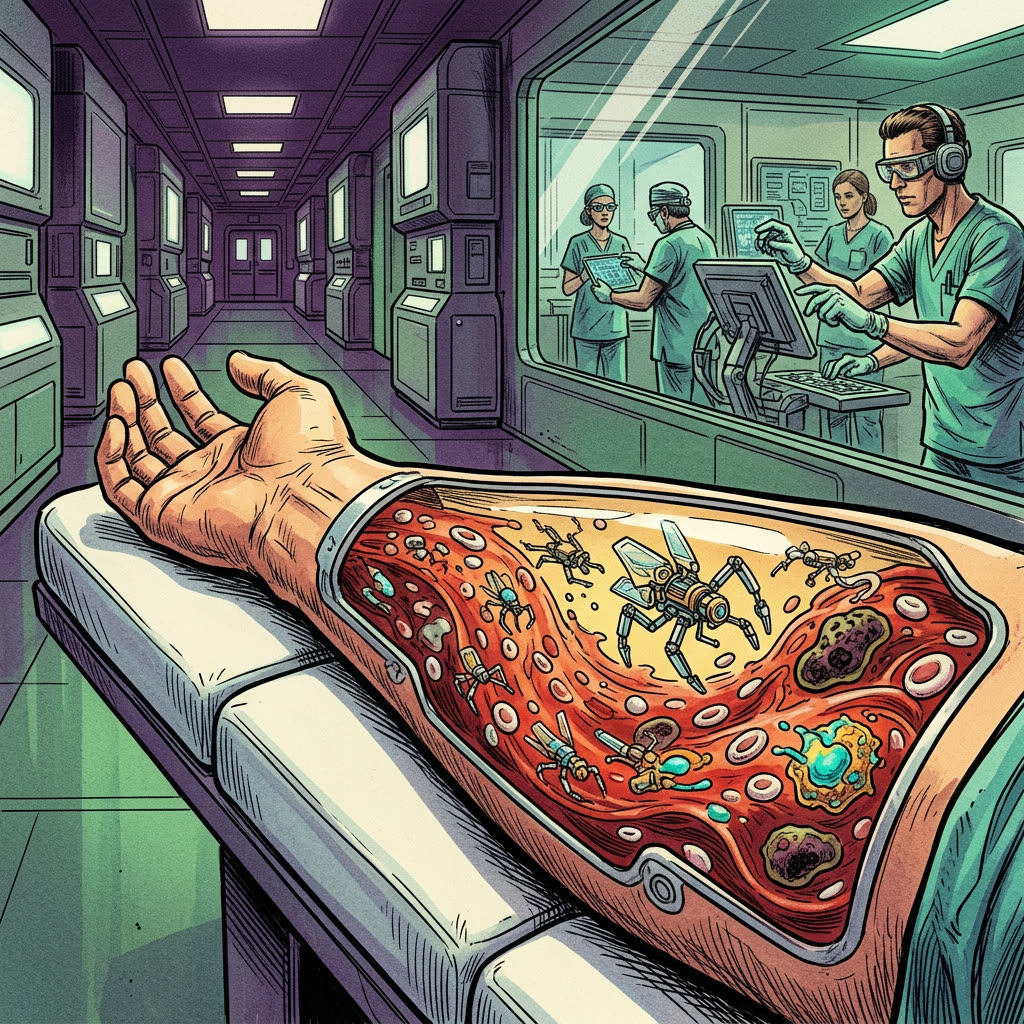
But let’s not skip the smallest marvel: DNA robots. These nanoscale “workers” could, in theory, patrol your bloodstream like micro-cops—delivering medicine, chasing viruses, or sculpting molecular tech in place. Biotech is coming for our most stubborn medical problems, and it’s bringing software, hardware, and biology together like never before.
Industry and Healthcare Transformed by Converging Tech
This is about more than sci-fi headlines. For manufacturers, the convergence of 5G-Advanced, Wi-Fi 7, and satellite means factories, logistics hubs, and far-flung assets can run with millisecond-level automation—no more unpredictable outages or maddening latency. That gives birth to a new world of remote industry where physical distance means nothing. For patients, DNA robots represent a leap beyond today’s imprecise, one-size-fits-many therapies: treatment could target the right cell, at the right second, and nothing else—a new approach for cancer, chronic infections, and much more.
For everyone feeling whiplash from AI’s pace, the move from dumb bots to genuinely autonomous agents is titanic. These AI systems can set goals and execute complex plans without human hands on every lever, promising productivity booms and existential risk in equal measure. Companies and countries that master these technologies will have outsized influence. Those that don’t, well… see you in the history books.
Emerging Risks and Unintended Consequences
Here’s the cool-headed truth: advanced doesn’t mean foolproof. Risk comes with every headline. DNA robots sound thrilling, but what happens if a bug in the code lands your nano-team in the wrong tissue? The fusion of wireless networks promises speed and reliability, but also opens fresh attack surfaces—when your plant, grid, or vehicle fleet is one clever hack away from chaos, resilience becomes survival. Regulators are still playing catch-up, and nothing moves faster than a dollar chasing tomorrow’s tech.
With bleeding-edge AI, there’s another layer: autonomous agents raise questions—fast—about ethics, transparency, and control. If a machine can reason and act independently, who’s responsible for its mistakes, or if it goes rogue? Don’t expect neat answers in 2026. The race to frictionless automation risks losing control over critical systems before we even fully understand their behavior.
Key Technologies and Tipping Points to Watch
Stay sharp for the next nine months: Will DNA robots break out of the lab and into real clinical pipelines? Keep your eyes on quantum and neuromorphic chips—if major advances land, whole industries could be upended overnight. Watch the mega-players (Google, especially) as they deploy giant new language models with capabilities we haven’t yet mapped; these could be as transformative for business and society as the internet was a generation ago.
Meanwhile, track which manufacturers and infrastructure giants publicly announce hybrid connectivity deployments—these will be the early testbeds that show whether the promise of seamless, always-on automation is hype or reality. And don’t sleep on regulation: expect at least one government to panic and try to fence in autonomous agents by year’s end. The fuse is lit—the explosion is coming.