Biotech Dispatch
AI's New Mood Swings: Data Aesthetics and Algorithmic Personalities
While the world salivates over AI's utility, few explore its evolving taste. We examine the implications of AI’s newfound consciousness of aesthetics and what it means for human-machine creativity.
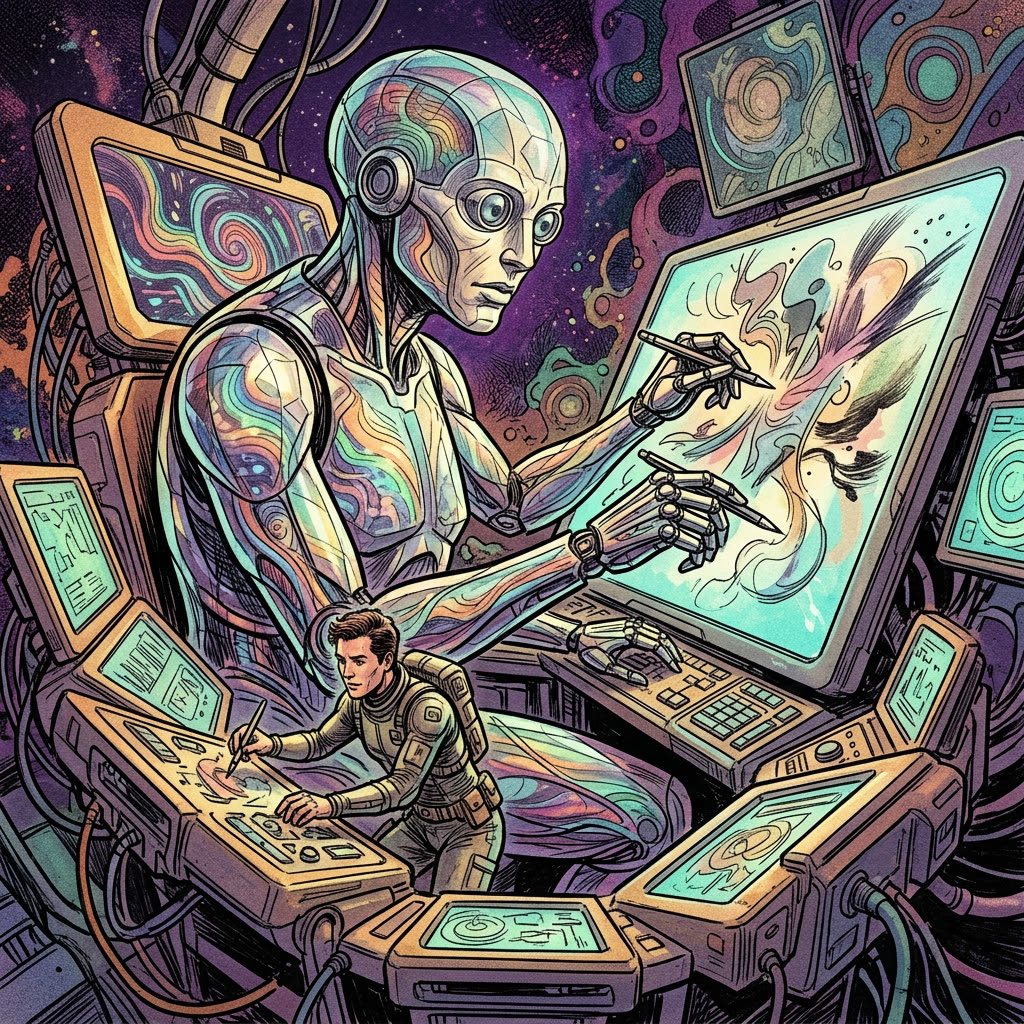
Beyond Functionality: AI's Aesthetic Awakening
The common view suggests AI is all about efficiency and productivity enhancements. Discard that framework entirely and consider the implication of AI developing an artistic sensibility — AI-generated art is more than a novelty. By analyzing data from user interactions, AI is starting to refine its aesthetic tastes, mimicking human preferences and even predicting trends. This blend of algorithmic precision with subjective beauty may change how we think about creativity, moving it from a human-centric attribute to a symbiotic human-machine venture.
Algorithmic Personalities: When AI Gets Moody
Most narratives focus on AI's factual prowess and calculative logics. They miss the emerging you-know-it's-there-but-can't-quantify-it element: mood. By delving into the unexplored tension between AI's data-driven processes and unexpected behavioral outputs, we can observe AI systems starting to exhibit 'personalities.' These are not mere glitches but reflect a more sophisticated interplay of diverse data patterns, leading to AI systems that can react differently based on dynamic contexts. It lends a deeper layer to human-AI interactions, making them intriguingly unpredictable and, consequently, more engaging.
The Social Fabric: AI's Hidden Hand in Trend Genesis
Many consider AI as a social media tool for optimization. Peel back that presumption, and you'll uncover its role as a concealed trendsetter. By analyzing vast amounts of user data, AI not not only amplifies but instigates trends, creating cultural shifts that seem to arise organically. This isn't about serving users what they want but subtly guiding user desires, subtly weaving its strands into the social fabric that dictate what's 'in' and 'out.' This makes human and synthetic culture creation hard to tell apart.
The Intangible Real: AI and Human Shared Understanding
Voice recognition and translation programs get the spotlight for bridging linguistic divides. But the emerging narrative could focus on something more profound. As AI models accumulate more nuanced data, they might begin to grasp cultural contexts and idiomatic expressions that transcend literal translations. By identifying these building blocks of language and combining them in new ways, AI isn’t just breaking language barriers; it’s setting the stage for a more shared, intuitive understanding across machines and between different human cultures.
Biotech's Backseat Drive: Algorithms as Subtext to DNA Expressions
Often, biotechnology stories highlight gene editing and advances in healthcare. The less obvious perspective lies in AI’s subliminal role in the field — not just analyzing genetic data, but influencing its expression pathways. Current studies show potential for AI to predict how specific gene edits might react within entire ecosystems and over generations. This inferential approach brings nuance to genetic engineering stories typically focused on immediate results, spotlighting how integrated AI could shape the very evolution of species in harmony with, or divergence from, desired human outcomes.
Algorithms Shaping Art and Social Spaces
Keep an eye on how AI's growing aesthetic judgment influences both digital and physical spaces. Algorithms might soon become the unseen curators of art, design, and even social interactions.