Compute Dispatch
The Global Compute Arms Race Just Hit the Cellular Level
Don’t blink—frontier tech frontiers are multiplying before our eyes, from circuit boards to chromosomes. September 2026 will be remembered for a cascade of real, physical advances: TSMC’s monstrous 2nm chip yields, human trials in cellular reprogramming, DNA robots squirming towards the clinic, and an industry-wide scramble for control over chips, agents, and cloud territory—on Earth and now, off it. The era of compute optimization and biological capital is no longer hype; it's hard reality.
Record 2nm Chips and Cellular Reprogramming
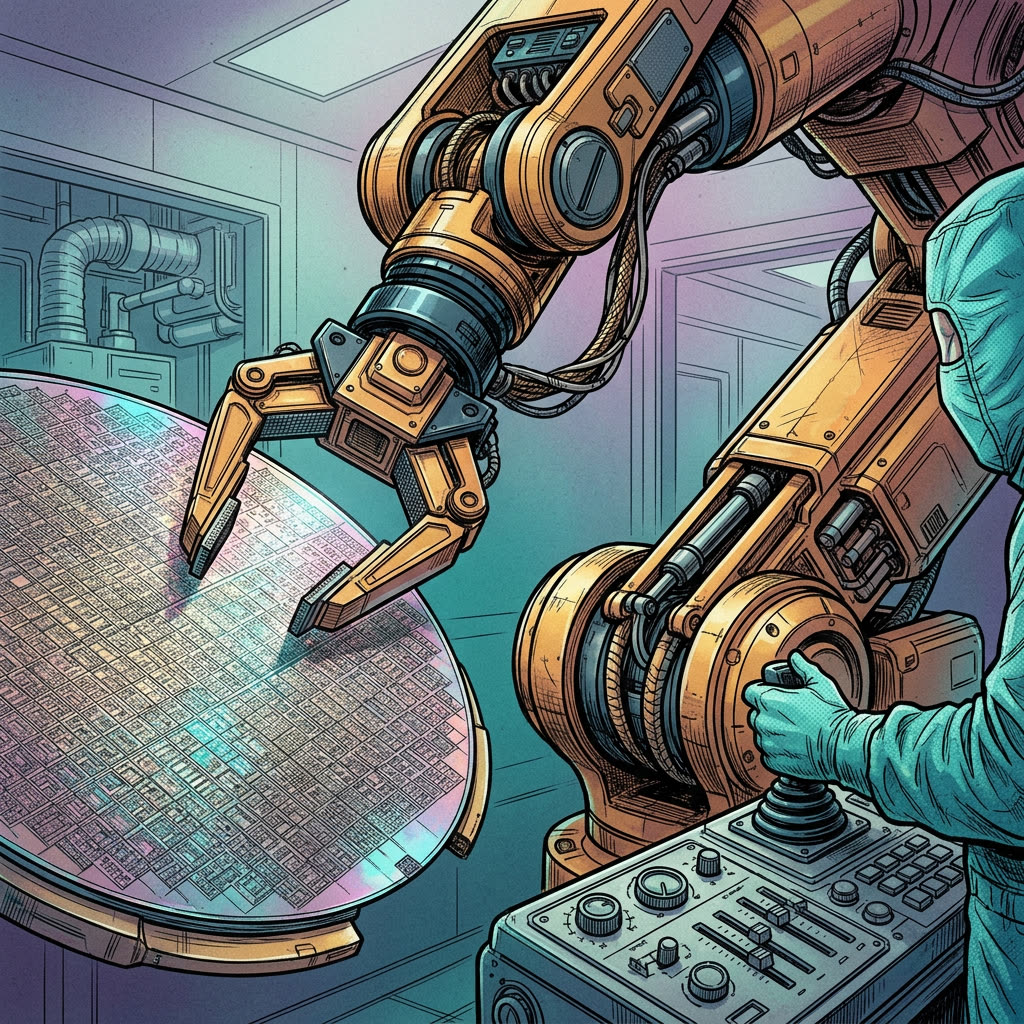
Late September didn’t deliver just another round of software upgrades or slick AI demos; this time, concrete results were tangible. TSMC cemented its place atop the silicon food chain by delivering record-high 2nm manufacturing yields—a quantum leap in power, efficiency, and miniaturization. In parallel, biotech kicked its way out of the lab: the world’s first human trials for cellular reprogramming are officially underway, promising to turn tissue (and perhaps, aging itself) into a software problem. Meanwhile DNA robots, until recently the stuff of speculative fiction, are close to becoming programmable medicinal devices that can search, destroy, and rebuild inside our own bodies. Each of these, on its own, would dominate headlines. Together, they signal a fundamental change—compute and biology are converging fast, and only the fastest movers will have a seat at the new table.
Control Over Chips and Genetic Protocols
This is about more than new gadgets or health hacks—it’s a ruthlessly optimized war for foundational control. Who owns the chips? Who secures the agents? Who writes the next genetic protocol? Today’s tech titans (see: Nvidia scrambling to harden autonomous agents against deep cyberattacks) are playing for all the marbles. Enterprises are flooding into agentic and autonomous AI for one simple reason: It doesn’t just automate grunt work (early adopters report 40-60% less manual drudgery); it’s becoming the engine for decision-making in everything from logistics to drug design. The goal: create feedback loops where AI, hardware, and wetware evolve together, compounding gains at a velocity that leaves 2020s SaaS dreams in the dust.
Escalating Risks Across Supply Chains and Space
Every leap forward reveals a new layer of chaos. As chip performance soars and agent adoption explodes (forecasted at 15% of all enterprise decisions within two years), supply chains tighten, geopolitics grows more dangerous, and the race moves both underground and—into orbit. China and the US are frantically redrawing chip supply maps, while billion-dollar bets pour into data center infrastructure on Earth and off it (SpaceX’s orbital compute farms are no longer just sci-fi). Meanwhile, every new AI-native platform, every nano-bot, multiplies the attack surface: cyber risks abound, trust anchors are shifting, and the contest for interpretability is getting ugly. Bleeding-edge now means both capital risk and existential risk—something even the mightiest tech titans can’t ignore.
Silicon and Biology Converge in Competition
Keep your eyes on the crossfire at the intersection of chips, agents, and biology. Watch TSMC, Nvidia, and OpenAI as they try to lock down their corners in this hyper-competitive mosaic. Expect further blurring of boundaries—AI-powered robots aren’t just learning tasks, they’re learning to program themselves and even rewrite their own code. Biotech will march past mere therapies toward programmable health interventions. And don’t get too comfortable with today’s advances being tomorrow’s standard; tech’s half-life is shrinking. As the bleeding-edge transforms into production reality faster than ever, the winners will be those who can wield both silicon and cells in concert—and weather the storm of disruption it unleashes.