Biotech Dispatch
DNA Robots and Agentic AI: The Bleeding Edge of 2026’s Tech Revolution
The second half of 2026 isn’t just buzzwords and demos—it’s a full-on leap into the weirdly tangible future of AI and robotics. From programmable DNA bots entering the body to whole new classes of AI that manipulate physical space and decode thoughts, we’re seeing rapid-fire advances moving straight from science fiction to near-reality. Forget boring upgrades: this is a tipping point. Let’s break down what’s dropping, what’s at stake, and, crucially, where the real action (and risks) live.
Programmable DNA Robots and Agentic AI Integration
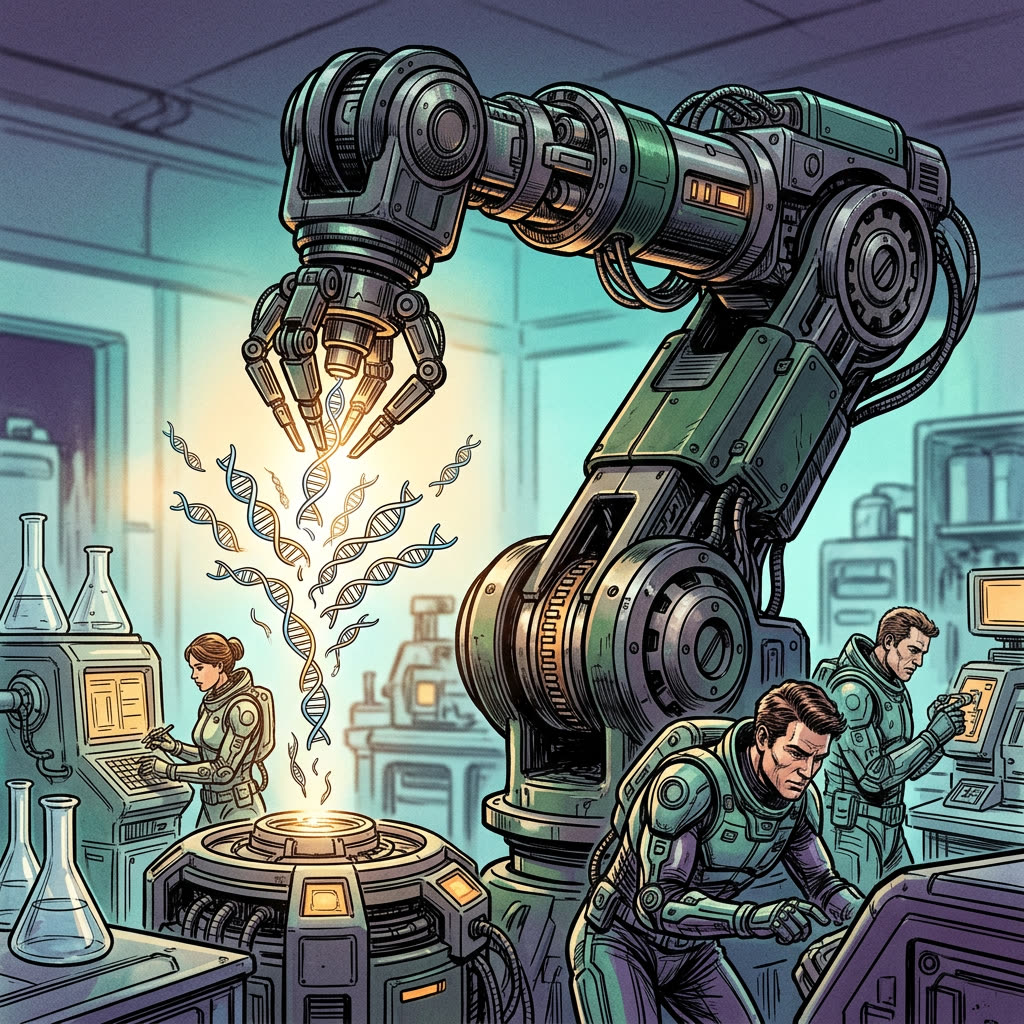
DNA robots are now more than a mad scientist’s fever dream—actual, functional micro-machines are being programmed to deliver drugs, hunt viruses, and perform custom molecular assembly within living bodies. We’re talking programmable, autonomous devices at the nanoscale. Simultaneously, tech leaders like AMD are shifting entire research orgs toward robotics and 'embodied' AI, focused on understanding and navigating complex real-world environments, not just parsing text. Throw in imagined speech decoding—where machines translate your thoughts into commands—and it’s clear: the hardware-software-concept divide is melting.
In enterprise AI, agentic AI systems and highly specialized domain models are taking over. Early adopters are slashing manual workloads nearly in half and seeing ROI spikes north of 40%. There’s a gold rush-level appetite for AI-native platforms, expected to hit $94 billion by 2030. Big money’s now doubling down on robotics, space tech, and inventive model architectures that push beyond chatbots and image generators.
Acceleration and Convergence Redefine Adoption
The true headline isn’t just 'new tech exists.' It’s the convergence, acceleration, and audacity of adoption. Every major player—OpenAI, Google, AMD, and more—is driving hard at not just better algorithms, but AI that touches and shapes the real world. When DNA bots start zapping viruses or building cell-sized factories, healthcare doesn’t just improve—it gets rewritten. Factor in agentic AI making decisions and executing tasks without human nannies, and enterprise ops start looking like self-running engines.
On the social and economic front, the difference between ‘cutting edge’ and ‘bleeding edge’ is only shrinking. The experimental today becomes tomorrow’s table stakes much faster—think months, not years. This makes the stakes tremendous: miss the wave and you’ll feel ancient overnight, while mastery could mean untouchable advantage.
Unresolved Risks and Reliability Challenges
With all this sci-fi come true, here’s the cold water: reliability and trust are still nowhere near catching up to the imagination. DNA robots inside humans? Even a minor programming bug or vulnerability is unacceptable, and the required regulatory, ethical, and technical answers don’t exist yet. Imagined speech decoding is world-changing for the disabled—but does anyone really believe we’ve figured out privacy and security on this stuff?
Similarly, companies racing to agentic AI are finding that bleeding-edge means bleeding risk. The transition from R&D to relentless deployment is messy—failures, embarrassing oversights, or even outright sabotage aren’t just possible, they’re guaranteed at this adoption velocity. Plus, 'domain-specific' can mean brittle: AI that blows minds in labs may shatter when exposed to messy real-world data.
Tracking Adoption and Investment Trends
Keep your eyes on the flashpoints where innovation and consequence collide. Which DNA robots clear regulatory hurdles and hit clinical trials? Who actually deploys embodied AI that works outside of a demo video? Scrutinize investments—track where the smart venture money goes: agentic platforms, AI for engineering, and quantum-adjacent infrastructure are drawing exponential cash, for good reason.
Also, watch how fast experimental/bleeding-edge ideas become standard operating procedure. If you’re an enterprise leader or investor, don’t get caught chasing yesterday’s hottest thing—focus on systems and models that adapt on the fly. The pace will not slow, and the real winners are those who not only surf these waves but shape where they break.