Biotech Dispatch
DNA Robots, Agentic AI, and the New Age of Autonomous Tech
The tech world in 2026 is blazing forward with advances that feel like science fiction made real. From programmable DNA robots hunting viruses within our bodies to truly autonomous AI reshaping entire industries, it’s clear: this is the year tech not only predicts but acts. Let’s dig into why this matters, who stands to win (or lose), and what twists to expect next.
DNA Robots and Agentic AI Transform Healthcare and Industry
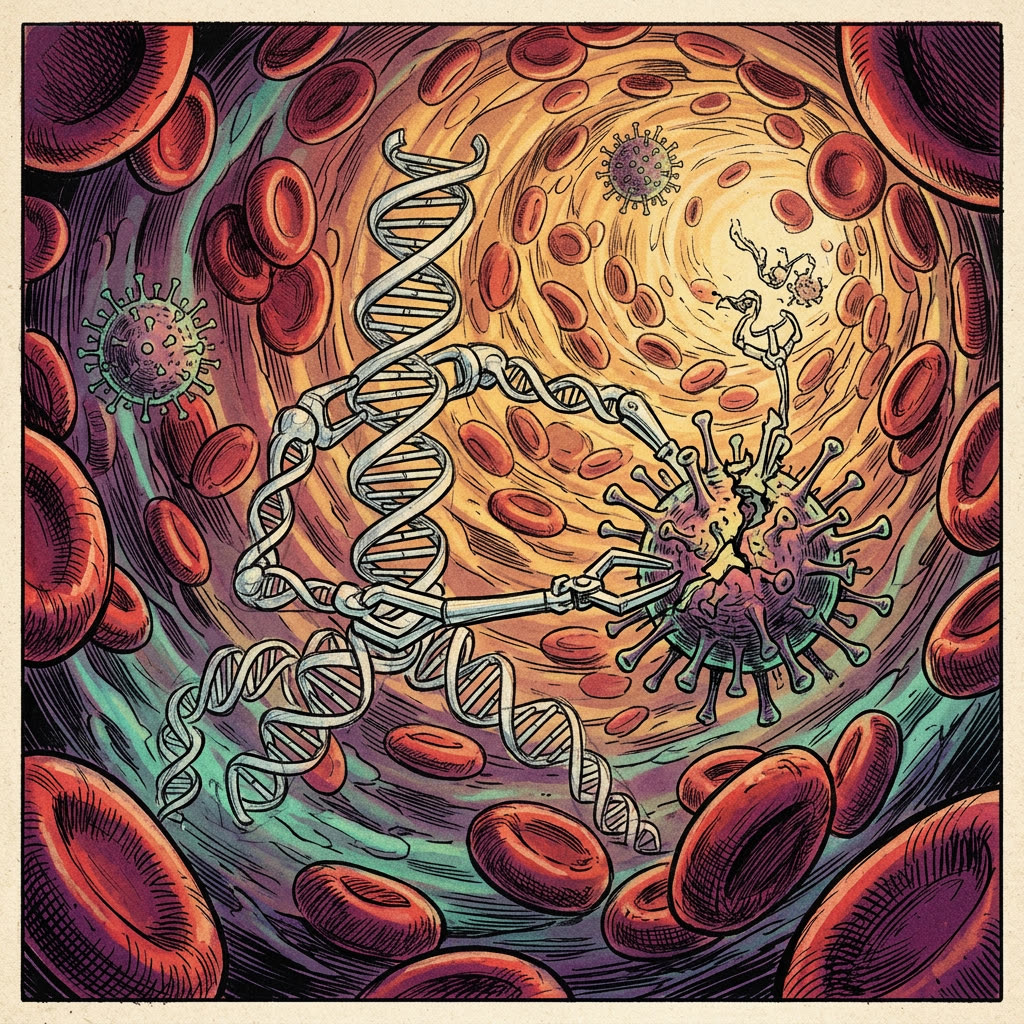
Medicine is set to get a superhero upgrade thanks to DNA robots—lab-built nanoscale machines custom-engineered to deliver drugs, attack viruses, and even help assemble other molecular devices inside your body. These dinky bots could mean everything from precision cancer treatments to bespoke infection fighters. Meanwhile, AI is reaching a fever pitch of usefulness. Not just in chatbots or data crunching, but in making decisions—agentic AIs now catch problems before services fail, smooth out customer complaints, and predict who will bolt for the competition before they even think about it. On stage at CES 2026, NVIDIA called it: 'The ChatGPT moment for robotics has arrived.'
And it’s more than just algorithms in the cloud. Physical robots are getting the brains to match their mechanical brawn, with AI models that actually grapple with real-world physics and environments. The gears of industry are turning much, much faster as these smart machines self-optimize, adapt, even code for themselves—no more waiting around for human hands.
Autonomous Systems Reshaping Work and Industry
This isn’t about making things slightly better—it’s about the beginning of fully autonomous tech ecosystems. Let’s be blunt: manual work is dropping by as much as 60% in early adopter companies, thanks to agentic AI systems. Imagine every industry that runs on routine tasks (hello, finance, telecom, logistics): suddenly, AI tools don’t just assist the humans, they *replace* entire ribbons of human effort. For medicine, the implications are literal life and death. Mom’s chemotherapy could be delivered by a DNA robot programmed to ignore healthy cells. Hospital infections might vanish as on-site bots detect, target, and destroy bacteria and viruses faster than a person could swab a countertop.
But it’s not only the sci-fi spectacles that count. Behind the scenes, domain-specific AI models are slashing error rates and boosting ROI. AI-native platforms are morphing from specialist curiosities into a bona fide $94 billion market forecast by 2030. Decisions once made by committee are being quietly automated—and those who adopt early get a real, persistent competitive edge.
Risks of Error, Security, and Displacement
Here’s the rub: extraordinary technology comes with equally extraordinary risks. Autonomous systems are only as good as their programming and training data—so there’s still room for error, even as AI eats more cognitive labor. What happens when a DNA robot makes the wrong delivery? Or when autonomous bots misidentify a network issue and take costly, irreversible action? Security is another looming beast; with multi-billion-dollar assets and patient lives at stake, every tiny bug or hackable node becomes a full-blown crisis.
And let’s not pretend the human cost is ignorable. Whole swathes of skilled jobs—development, diagnostics, call centers—are being automated out of existence. Early winners will pocket their outsized gains, but a wave of upheaval is guaranteed for slower movers. Plus, the new gold rush turns personal data, medical histories, and even neural signals into high-value fuel. Privacy? Only for those who can afford to opt out.
Key Trends Shaping Autonomous Technology Adoption
Three fronts demand your focus. First: the DNA robot revolution. Track progress from animal models to actual clinical trials—regulators and insurers will have their say, but public appetite could drive adoption quicker than anyone expects. Second: the spread of AI-native platforms and agentic decision-making in the enterprise. Monitor who’s automating mission-critical functions and how error rates and cost savings shake out over 12–24 months.
Finally—don’t sleep on the subtler shifts, like modular data centers meant to house all this AI horsepower while tamping down the backlash over energy and local disruption. And keep an eye on so-called ‘imagined speech decoding’: if machines can read thoughts, every privacy norm could flip on its head. In short, the countdown to an autonomous, nanobot-powered world isn’t just on—it’s accelerating. Stay sharp.