Physical AI Dispatch
AI Goes Physical: The 2026 Boom in Light, Robots, and Wildly Fast Computing
The AI and robotics world just got a power boost — literally. 2026 is showing us serious leaps: from mind-bending hybrid light-matter computers to a rapid surge in humanoid robots walking off production lines. Pour a double-shot of investment on top, and the next phase of technological chaos is officially in play. Here’s why this moment should have everyone from industry leaders to everyday tech fans on the edge of their seats.
Hybrid Light-Matter AI and Surging Robot Investment
Let’s talk headline findings: Researchers at Penn have conjured a hybrid light-matter particle. What does that mean in plain English? Imagine AI hardware that’s not just much faster, but absolutely guzzling less electricity—while tackling even hairier problems. Meanwhile, the world’s industrial brains are putting their chips on physical AI, fusing advanced software with physical machines. Analyst houses are predicting sevenfold (yes, 700%!) increases in humanoid robot shipments just this year, powered by an arms race in smarter, more adaptive logistics, manufacturing, and service bots. Even more telling: AI, robots, and agentic software are expected to attract double the investment this year compared to 2025.
AI and Robotics Converge in the Physical World
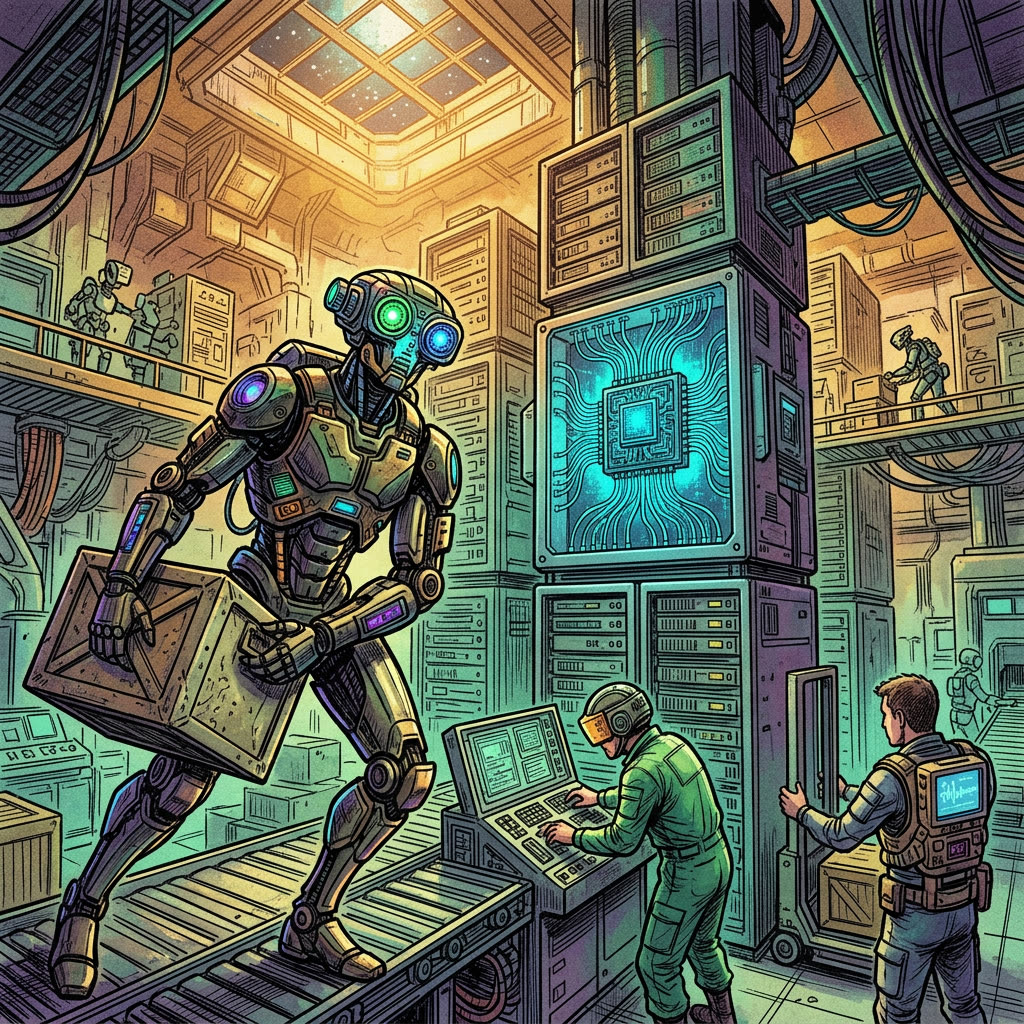
This is the critical inflection point for AI and robotics. What’s truly wild isn’t just the scale, but the convergence—AI is no longer stuck in the ether of code and the cloud; it’s crawling its way into physical reality at warp speed. The light-matter AI chip advance could help solve AI’s dirty little secret: its eye-popping hunger for power and cooling. If these photonic chips deliver, we’re talking about a future where supercharged AI gets both greener and cheaper to run. And those humanoid robots? This isn’t the 'helper bot’ prototype era. Real, adaptable robots in service and manufacturing environments could upend everything from warehouse work to the very idea of what a factory is.
Emerging Risks and Ethical Challenges
Of course, this isn’t a frictionless future. When something is labelled ‘experimental,’ risk and mess follow closely behind. These technologies are barely out of the lab—bleeding-edge photonic chips and mass-produced ‘human-aware’ robots are infamous for surprise failures, integration headaches, and what you might call 'invisible tripwires.' Watch for grid stress as hyperscale AI hardware launches collide with real-world infrastructure limits—SETR and IEEE reports both warn that data centers will demand every watt available, and sometimes more. Also, imagined speech decoding and similar advances are ethically explosive: translating thoughts to text or commands raises fierce privacy, consent, and security debates that no legislation has even started to grapple with.
Real-World Tests and Early Impacts
Keep your eyes peeled for proof that these upgrades actually work outside of PowerPoint decks. First, monitor if those new light-matter chips start showing up in flagship enterprise AI products, with concrete benchmarking against today’s silicon. Second, track real deployments of next-gen humanoid robots, especially in retail and logistics—are they just PR stunts, or quietly kicking humans out of jobs? Regulatory scrutiny over energy use and mind-reading tech is about to accelerate: watch for pushback as lawmakers scramble to keep up. Finally, this is the season when chaos creates opportunity—every bold misstep and bold success here could redraw the map of who actually wins the AI wars. Don’t look away now.