Physical AI Dispatch
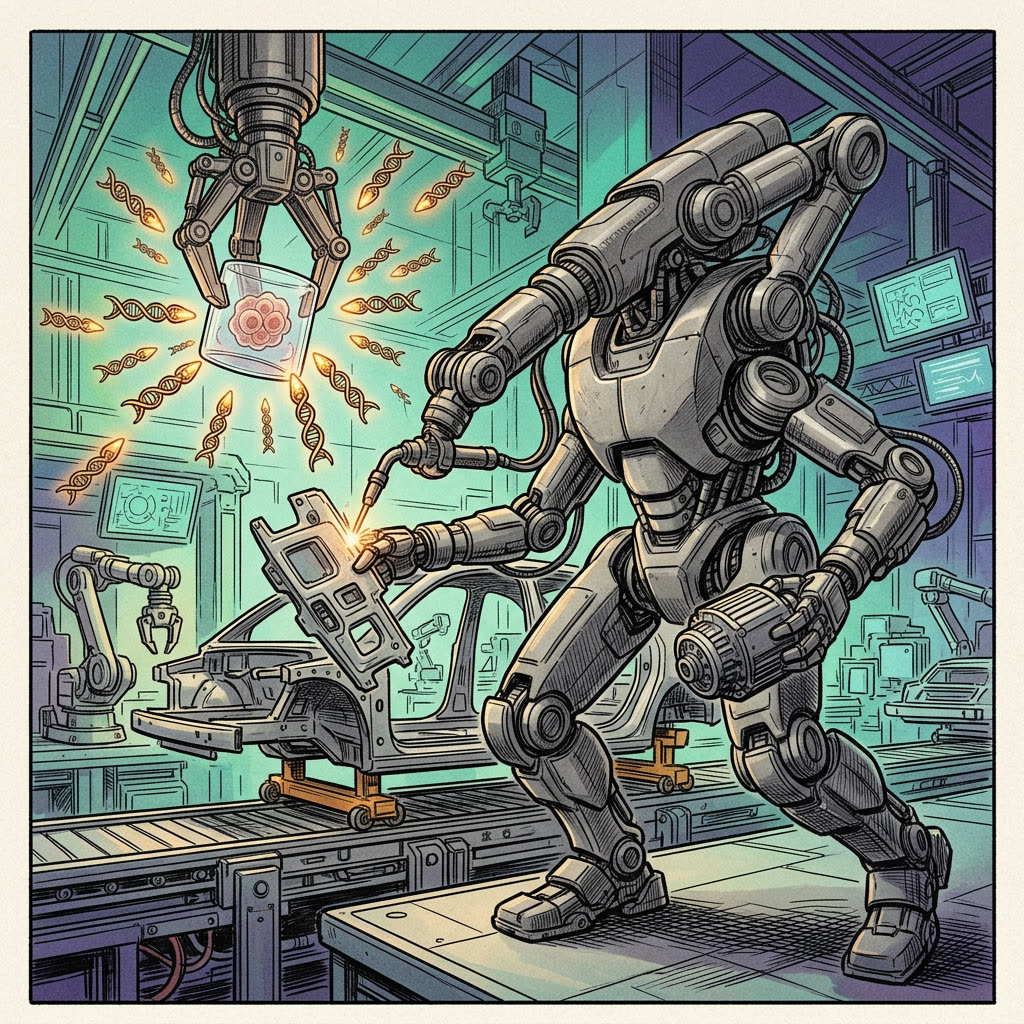
2026’s Robot Revolution: Autonomous Agents, DNA Nanobots, & the $9B Future
The world is churning out remarkable advances in robotics and autonomous tech—and if you blink, you’ll miss the gold rush. From fleets of tireless factory bots to DNA machines that fix you from the inside out, we’re about to see which shiny new technologies actually deliver. Here’s what you can’t afford to ignore if you want a seat at the winner’s table.
Autonomous Robots and AI Agents Transform Industry
Autonomous mobile robots aren’t just warehouse mascots anymore—they’re poised to become a $9.26 billion juggernaut by 2030, doubling their market in just five years. Pay attention: this isn’t hype, it’s a stampede. Robotics as a Service (RaaS) is joining the parade, smashing the $24 billion mark—meaning even small firms can play without buying a single shiny bot. Meanwhile, AI is breaking out of chatbot jail. Expect autonomous agents capable of actual reasoning and planning, not just answering your pizza order. Data is king, and companies are smashing their old monolithic systems to plug directly into slicker, smarter AI that acts, not just reacts.
Autonomous Agents Transforming Industrial Productivity
This fusion of brains (AI) and brawn (robots) is the real engine behind tomorrow’s productivity explosion. A rise in autonomous agents means not just repetitive tasks, but whole workstreams—supply chains, maintenance, even healthcare—could soon run with minimal human babysitting. Already, machine intelligence in industrial settings is driving remarkable results: in automotive welding, edge computing has pushed pass rates from 92% to 99.5% and chopped downtime by 70%. These aren’t toy wins; they’re why major companies are ripping out legacy tech and betting the future on autonomy. If you’re still treating this as a science project, prepare to be left in the dust.
Risks of Rapid Innovation and Obsolescence
Don’t get giddy just yet. For all the buzz, there’s a minefield underfoot: the pace of innovation means today’s most advanced technology is tomorrow’s commodity, and the laggards will get eaten alive. Bleeding-edge experiments (think DNA robots building molecules or killing viruses inside your body) still belong in R&D, but the contenders that make it to the forefront of research will mature nearly overnight—so your innovation roadmap must have dynamite reflexes. And let’s not kid ourselves: Legacy IT bottlenecks and the eye-watering data generated by every connected device (just ask anyone running an autonomous vehicle fleet) can choke even the most promising projects if you’re not ready.
Key Transition Zones and Early Adopters
Watch for who actually manages to ditch their crumbling legacy data systems and plug ultra-fast, trustworthy AI into live operations—these are the companies that will leap ahead. Track which startups or incumbents are rolling out neuromorphic chips and small language models that give agile decision-making at the edge. The real drama will play out in the transition zones: DNA robot therapies jumping from lab miracles to first-in-human trials, RaaS platforms cannibalizing old-school automation, and network operators flipping the switch on autonomous infrastructures. It’s all happening on a 6–12-month cycle now. Keep your eyes peeled—this is where fortunes will be made and fakers exposed.