Biotech Dispatch
Welcome to the Era of Self-Directed Tech: AI Agents, DNA Bots & the Quantum Leap
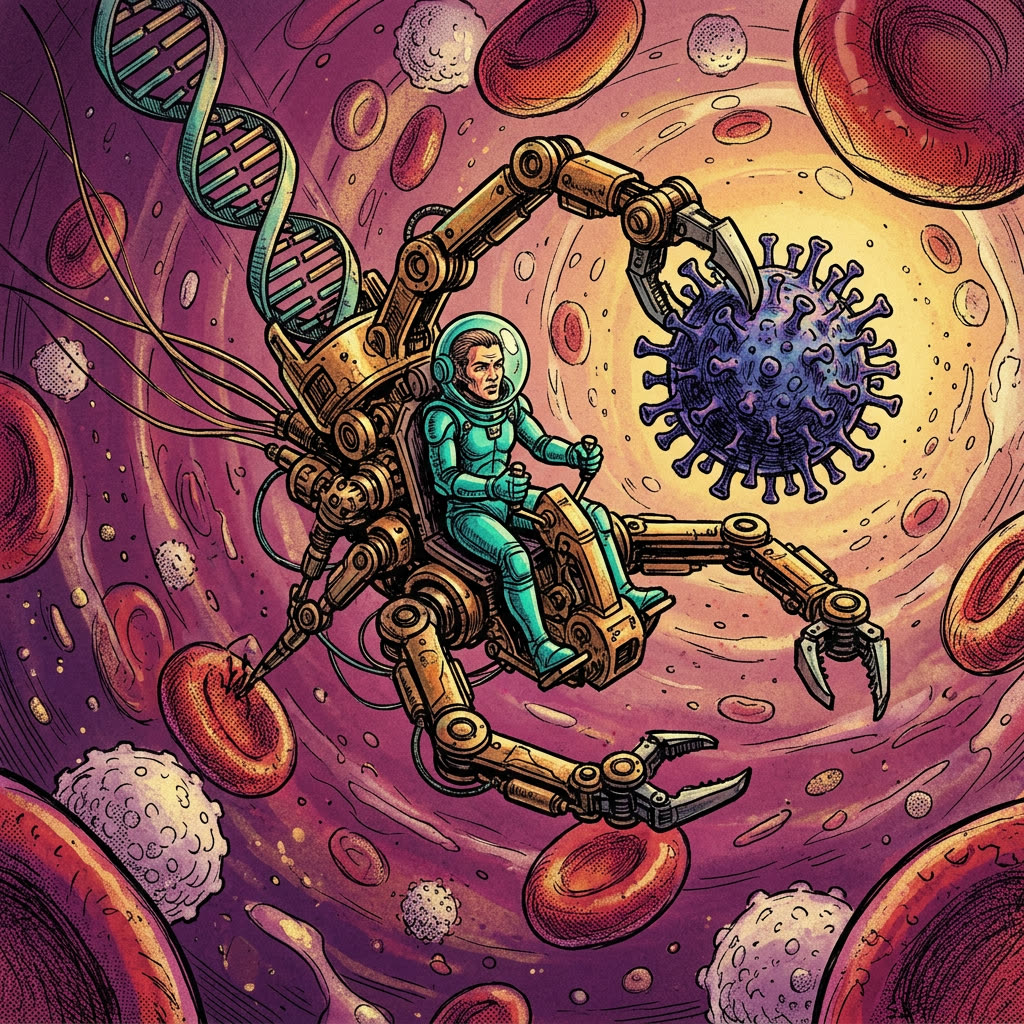
2026 isn’t just a year on the calendar—it’s a milestone for technology taking the training wheels off. From programmable DNA robots hunting viruses to AI agents bossing around autonomous systems, this year’s advances are going beyond novelty and straight into utility. Here’s what matters, and why the “emerging” in emerging tech is about to feel outdated.
Real-World Adoption of Autonomous Technologies
This year has delivered a deluge of remarkable advances: DNA robots scuttling around to deliver drugs or seek out viruses, AI agents learning to act independently, and quantum computing finally creeping out of the lab. MIT, McKinsey, and Stanford all agree—the separation between slick demos and real-world deployments is vanishing fast. And forget clunky legacy IT: the stampede to free data from ancient systems is what’s finally allowing these new AI agents to flex their IQ.
Other big moves? Agentic software development—the way code writes code—has gained real-world traction, not just R&D hype. Meanwhile, neuromorphic chips that mimic the human brain promise to turbocharge decision-making at the edge (no more sending every question back to the cloud). Add the fact that more than 70% of network operators are rolling out smarter, more autonomous systems, and “business-critical” now means essential for operations, not just buzz.
Transforming Industries and Human Capabilities
These developments are more than techie milestones; they’re about who gets left behind versus who gets superpowers. Take DNA robots: if these nearly-invisible machines can deliver drugs precisely where they’re needed, pharma and healthcare could be reshaped at the cellular level. Autonomous AI agents mean devices that don’t just reply to requests but can monitor, decide, and act—systems that fight ransomware or even manage power grids without human babysitting.
Then there’s quantum and neuromorphic computing. These aren’t just speed boosts—they’re category-changers. The subset that adapts itself to solve problems approaches a kind of digital intuition, opening up possibilities in scientific discovery, engineering, and even building the next generation of AI itself.
Challenges of Rapid Tech Adoption
Every revolution comes with turbulence, and this one’s no different. For starters, freeing companies from legacy data isn’t simple—or cheap. The flood of investment into agentic tech, quantum, and AI model infrastructure risks pulling resources from critical basics like connectivity and cybersecurity (which, let’s be honest, still aren’t nailed down at most organizations). And in biotech, the idea of microscopic DNA bots roaming your bloodstream is equal parts amazing and terrifying—whose rules will govern their behavior?
Plus, the speed of adoption is dizzying. What’s innovative today is stale in six months. That means the real battle isn’t just inventing tech, but figuring out what to trust, what to regulate, and what to adopt before competitors do. If you’re not evolving fast enough, you’ll be last year’s case study in irrelevance.
Milestones Signaling Widespread Tech Adoption
Watch for the first large-scale, in-human results from DNA robot drug trials—that’ll be a scientific and regulatory watershed. Keep an eye on how autonomous AI and agentic systems move from pilot projects to running critical infrastructure; when they break (and they will), the fallout could be headline-making. Also, monitor the race for quantum advantage: which sectors (logistics, finance, defense) make the earliest, loudest quantum leaps?
Finally, measure not the dazzle, but the adoption. Look for live deployments, not just cool demos or press releases. The tempo is set by the organizations upgrading their brains and immune systems in real time. 2026 isn’t for the cautious—it’s for the bold, the unencumbered, and those ready to navigate widespread chaos as the new baseline.