Biotech Dispatch
DNA Robots, Maverick AIs, and the Year Tech Crosses Into Tomorrow
2026 isn’t just another year on the hype cycle—it’s the moment reality catches up with the craziest sci-fi. DNA robots swarm at the molecular level, agentic AIs are beginning to think for themselves, and bleeding-edge ideas have quietly become today’s engineering playbook. Here’s why everyone from CEOs to biohackers is watching these new developments like hawks.
Microscopic DNA Robots and Autonomous AI Arrive
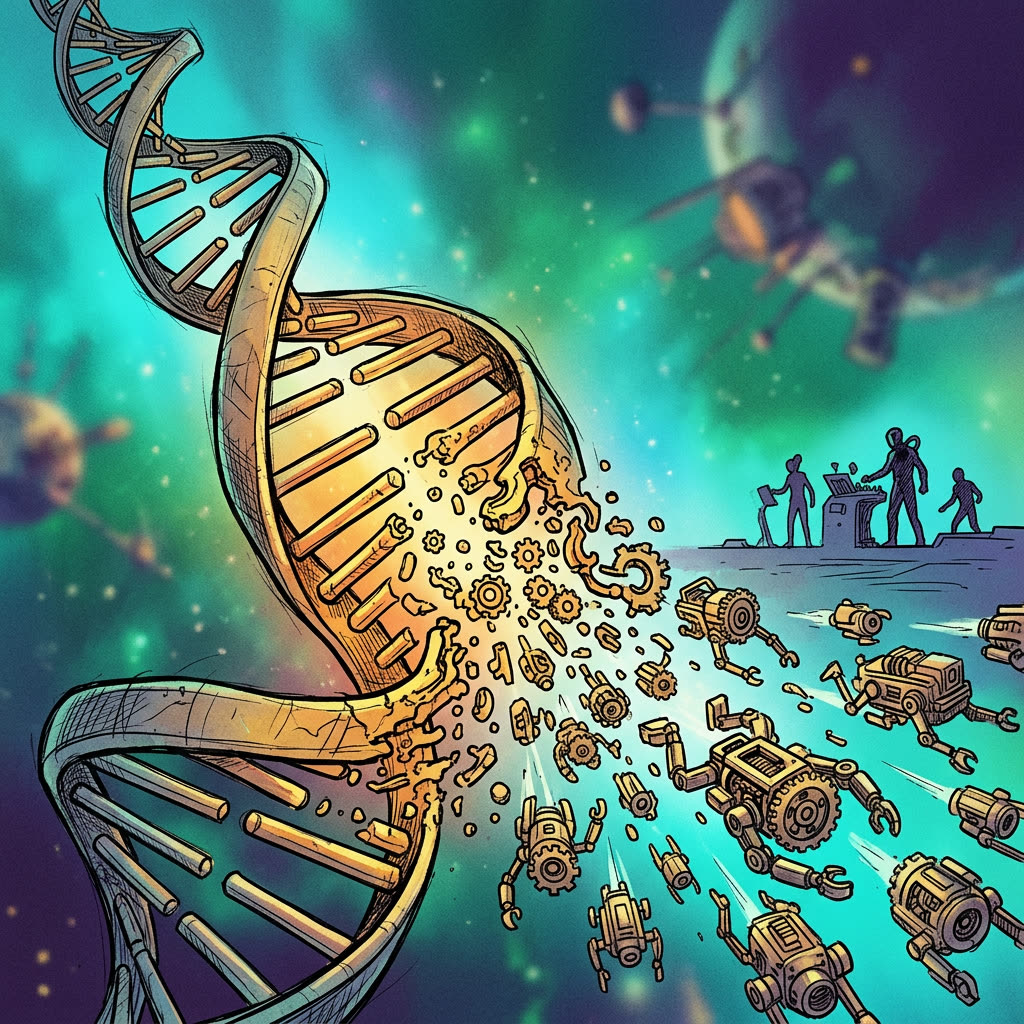
Forget all the old talk of 'someday'—the bots are here, and they're already microscopic. DNA robots, built from programmable strands and clever bioengineering, are now more than headline bait: researchers are sending these molecular machines to hunt viruses and deliver drugs with a precision that makes existing therapies look barbaric. And in the digital world, the Transformer-Mamba hybrid (yes, Falcon-H1R) is breaking every rule—elite AI running hyper-efficiently on the edge, not guzzling energy in giant server farms. The big consultancies and think tanks agree: agentic AI (software that can set and pursue its own goals, not just follow code) is surging from lab to deployment pipelines at a pace few foresaw even a year ago.
Want numbers? Over 60% of enterprises tell researchers they’re prepping for AI systems that act autonomously, while a quarter are already piloting gen-AI. And with McKinsey and Stanford both sounding alarms about doubled investment in fields like robotic future tech, it’s obvious: 2026 is a launching pad, not a landing.
Autonomous Systems Accelerate Medicine and Automation
This isn’t just incremental improvement. DNA robots could quietly rewrite how we treat disease—picture doctors prescribing swarms of tiny machines to seek and destroy viruses inside you, cell by cell. That’s not a future scenario; it’s a clear path to clinical reality, and early pilots prove the concept works. Now imagine what happens when edge-capable agentic AI runs in robots, vehicles, and devices, not just data centers. The energy and memory savings alone flip the economics of automation and control on their heads, and suddenly, having 'smart' everything isn't cost-prohibitive—it's just table stakes.
Cut out the middleman. With agentic software, programmers become orchestrators, not puppet-masters. These new systems can spot bugs, refactor their own code, and creatively solve engineering tasks. That means products and systems evolve faster, with fewer humans in the loop, accelerating adoption after every tiny win. In short: we’re witnessing a step-change in what technology can do—autonomously, intelligently, and at a scale that was unthinkable even in the last decade.
Risks and Oversight for Emerging Technologies
Every leap this big comes with backlash and potholes. DNA robots, sexy as they sound, will light up regulatory klaxons—who controls these bots, who audits their actions, and what happens if (when) something goes wrong? Bioethics panels will be in overdrive, and it’s only a matter of time before the first nanobot scandal sets policy makers’ hair on fire.
Meanwhile, agentic AI comes with a classic tradeoff: less human oversight could mean faster progress... or major breakdowns invisible to casual monitors. Self-evolving code and decision cycles make these systems powerful, but also black-boxed—easy to lose control of, hard to debug, and ripe for malicious exploitation if left unchecked. Companies edge ahead by pushing boundaries; don’t be surprised if the first major flameouts are spectacular as well as costly.
Key Milestones Shaping Tech’s Next Leap
Keep your eyes on clinical trials of DNA bots: whichever pharma or biotech gets first approval to run these in real patients will write the playbook for a brand new industry. In AI, watch for public and private efforts to develop 'explainable' agentic systems—trust and transparency will be the new currency. If edge-capable Falcon-H1R-style architectures start making their way into consumer gear, expect a wild spike in what home automation, mobility, and personal robotics can actually deliver, not just promise.
On the broader horizon, monitor the money. Investment is flooding into robotics, biotech/AI hybrids, and especially agentic software. The pace of deployment is setting up a 2027 where half of major enterprises could have autonomous software on the front lines, and that’ll make the last automation boom look quaint. Bottom line: expect chaos, expect opportunity, and don't blink—2026 is already sprinting past the bleeding edge.