Agents Dispatch
The 2026 Frontier Tech Tsunami: Agents, Biotech, and the Blitz on Legacy
Stanford, MIT, and every plugged-in tech oracle are shouting it loud: 2026 is the year when 'frontier technology' becomes mainstream ammunition, not just R&D vapor. Forget the hype cycle—this is the adoption curve in high-velocity action. AI is plugging deep into every layer, synthetic biology is rewriting what 'production' means, and the death knell of legacy data has never rung louder. Let's break down what matters and where the real powder kegs are stashed.
Agentic AI and Biotech Enter the Mainstream
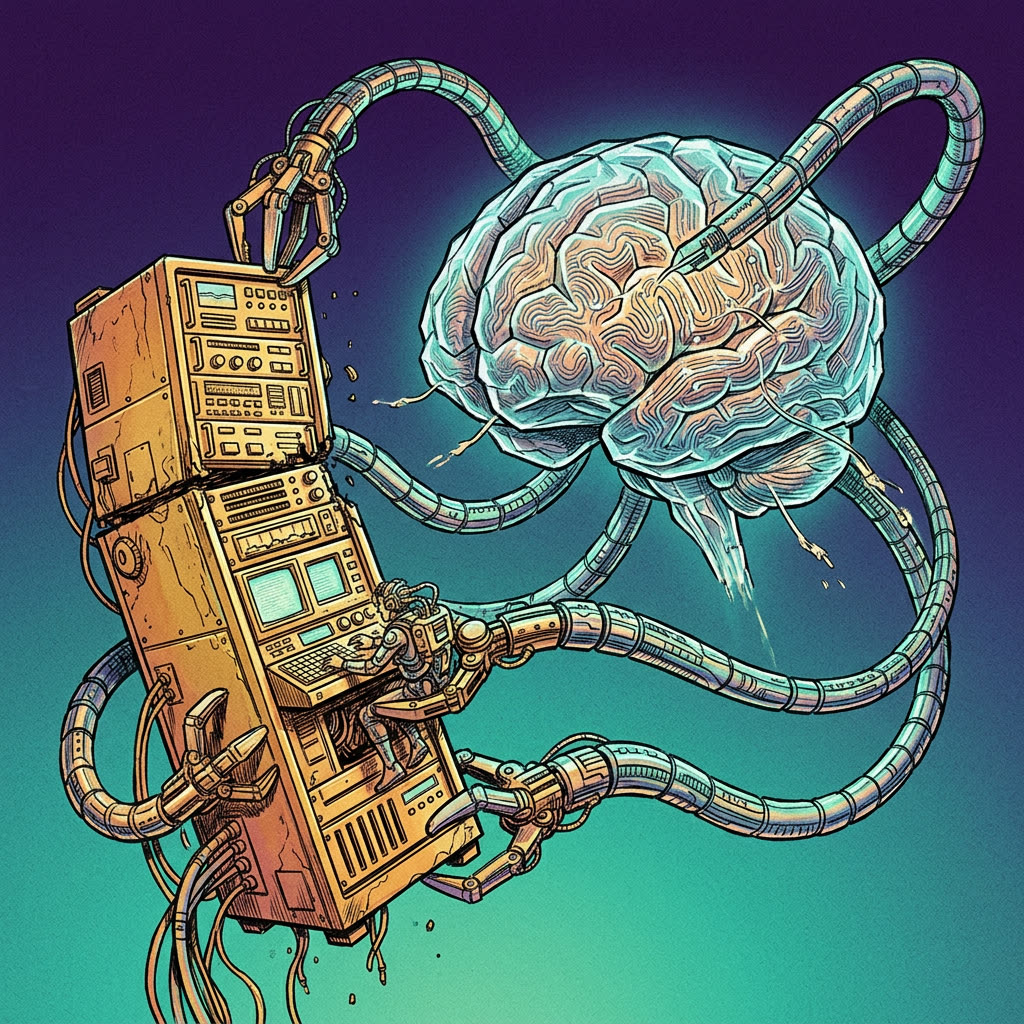
Let’s start with agentic AI—think software that not only acts on its own, but also learns, adapts, and even negotiates outside familiar playbooks. Agentic AI adoption is rocketing fast: it went from fringe curiosity in 2024 to powering around 15% of enterprise decisions by 2028. These hyper-autonomous bots are ditching the dumb-script era, slashing manual workload by up to 60% for bold companies that dared to rip up their legacy rules.
It’s not just code. Synthetic biology is finally breaking out of lab curiosity into factory floors and supply chains. Meanwhile, bleeding-edge tech—from imagined speech decoders (turning your thoughts directly into machine inputs) to quantum-infused logistics—is no longer just pitch-deck candy but making real-world dents. If you wanted to see the definition of 'mainstreaming the future,' this is it.
Disruption of Traditional Business Dynamics
This isn't just about shiny new gadgets—it’s a hard reset for how work is done, businesses operate, and leadership makes calls. AI rewiring software development means that companies no longer compete just on talent or capital, but on how swift and smart their tech stack morphs. Coding productivity leaps, bot-powered taskforces multiply—suddenly, smaller players can outmaneuver lumbering giants.
Every mature industry is under siege from a new wave of data-native upstarts, sidestepping legacy bottlenecks altogether. Whether you’re a biotech startup designing organisms to spec or a traditional manufacturer slicing weeks off a delivery cycle with quantum scheduling, the chasm between innovators and the laggards only gets wider from here.
Escalating Risks and Trust Dilemmas
All these leaps come with a price and a paradox: what’s state-of-the-art today is old news next year. The rapid six- to twelve-month cycle means even current bleeding-edge bets feel perilous. And there are big, messy questions on trust and risk—how much do you wager on autonomous agents that you can’t thoroughly audit? Are 'thought as input' interfaces a security pipe bomb waiting to blow?
Add in the double-or-nothing gamble on AI reliability and data privacy. Organizations are struggling to find the sweet spot between blazing ahead and not burning down the house, especially with AI-bots acting on data we don’t always fully control or understand. The headline: scaling these tools at speed isn’t for the faint of heart, and the gap between cautious increment and brave moonshot just got wider.
AI Agents and the Shift in Decision Power
Agentic AI isn’t going away—it’s going to start making major decisions not just for customer service or sales, but for product development, supply chain adjustments, even mergers and acquisitions. The real inflection point is coming as these agents stop being tools and start being collaborators (or competitors) in their own right.
Watch quantum-first startups and synthetic biology platforms rack up investment dollars—McKinsey pegs some categories for a more than 2x funding spike year-over-year. Finally, track the exodus from legacy data: as more firms pull the plug on yesterday’s systems, the new battle will be about trust—who controls the clean, actionable, and truly confidential data that powers this next wave? Whoever wins that owns the future.